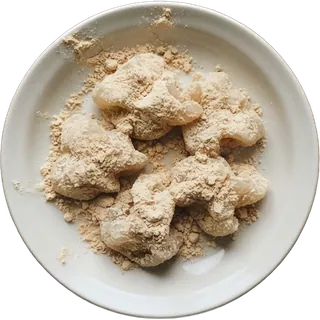
Akafuku Mochi
A small lozenge of pounded rice under a wave of smooth red bean paste combed with three finger ridges, said to represent the river running past the shrine.
How to order
赤福をください。
Beans, sugar and rice. Three centuries of recipe and not one animal ingredient in it.
History
Ise grew around its shrine complex on the Isuzu river; pilgrims walking there for days needed food that travelled well and restored them quickly: pounded glutinous rice shaped into lozenges, coated with red bean paste. Three combed ridges echo the river’s current, tying the sweet to the shrine route, sold near the gate for travellers.
Azuki beans cooked with sugar form the paste, and glutinous rice is steamed and pounded for the base, with no dairy, egg, or gelatin in the method. It reflects a wider pattern in Japanese sweet-making where plant starches and legumes, not animal fat or milk, supplied richness and sweetness.
Where to get it
The shop on the Isuzu river by Ise's inner shrine, made fresh each morning and sold at stations across the Kansai region.