Baba Ghanoug
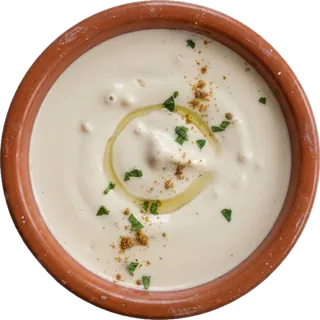
Aubergines are charred whole over an open flame until the skin blisters and blackens, then peeled and the smoky flesh is crushed with tahina, lemon juice and garlic into a coarse paste. It is served as a cold mezze alongside bread in Cairo and Alexandria kitchens.
How to order
واحد بابا غنوج لو سمحت
Since some kitchens stir in yoghurt or labneh, ask ‘فيها زبادي؟’ to check before ordering, or request it ‘من غير زبادي’ if you want the plain version.
History
Baba ghanoug is made across Egypt wherever aubergines can be grilled directly over a flame, a technique shared with Levantine kitchens but adapted locally with more tahina and lemon than yoghurt. Cairo and Alexandria households prepare it as part of a mezze spread with moutabal, torshi and flatbread, often for Ramadan iftar tables or during the Lenten fasting periods that Coptic households observe through much of the year. Street carts and kushari shops rarely sell it; it stays a home kitchen and small restaurant dish, prepared close to serving time because the charred aubergine flavour fades once the flesh has sat too long before mixing.
The classic recipe is aubergine, tahina, garlic, lemon juice and salt, with no dairy or meat involved, and a bakery or restaurant serving it this way follows this plant-based method unchanged. Some Cairo kitchens stir in a spoonful of yoghurt or labneh to soften the smoky bite, which turns the dish into a vegetarian but not plant-based version. A diner wanting the plain version should ask whether yoghurt has been added, since menus rarely specify this themselves.
Where to get it
Baba ghanoug is sold at mezze counters, grill restaurants and some Cairo and Alexandria cafés that also serve moutabal and hummus; it is less common from street carts than ful or taameya.