Combava
Citrus hystrix grows into a knobbled, deep-green fruit whose zest, not its juice, is what cooks want, grated to threads over a dish rather than squeezed. In Réunion it finishes rougail and cari, added at the last moment at family tables and roadside snack stands alike.
How to order
Je voudrais trois combavas, s'il vous plaît.
The fruit itself needs no checking, since it is pure zest with nothing animal in it. If you are buying it already grated into a prepared rougail rather than picking the fruit loose, ask what the rougail is built on, since rougail morue uses salted cod and rougail saucisse uses pork sausage: «C'est un rougail avec ou sans viande ?»
History
Combava — the word is Réunion Creole, and standard French has taken it over unchanged — is Citrus hystrix, a small knobbled lime native to Southeast Asia. It reached Réunion through the Indian Ocean trade routes and the waves of indentured migration from India, Madagascar and China that followed the end of enslavement in 1848, and the tree has been grown in Réunionnais house yards ever since. Fruit is picked by hand through most of the year, with the heaviest harvest in the cooler austral months from June to September, and sold loose at bazars forains in Saint-Paul and Saint-Pierre or simply pulled off a neighbour's tree.
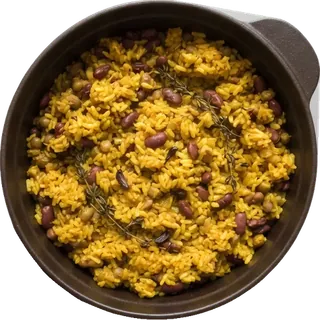
The fruit carries no animal product at any stage: zest is grated raw, straight from the skin, and added at the very end of cooking or at the table, never touching butter, stock or lard on its way there. The question that matters is not the combava but what it lands on. Rougail can be built purely on tomato, onion, garlic and chili, or it can be rougail saucisse, thickened with fried pork sausage, or rougail morue, based on salted and flaked cod; a cari finished with combava zest may equally rest on a meat or fish stock begun hours earlier. The zest changes nothing about any of that.
Where to get it
Bazars forains and covered markets across Réunion sell combava loose by the fruit, around €0,20-0,50 each — Saint-Paul on Fridays and Sundays, Saint-Pierre on Saturdays. Most Réunionnais households simply pick it from a tree in the yard.