Doce de Abóbora
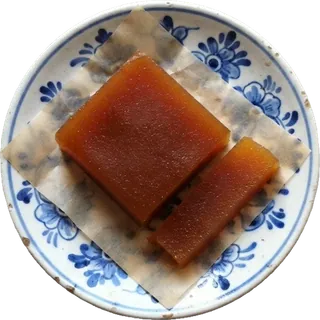
A thick jam of pumpkin or chila cooked down with sugar, lemon peel and cinnamon until it holds its shape on a spoon. Portuguese households put up jars of it every autumn to see the family through winter.
How to order
Tem doce de abóbora caseiro?
The jam itself has nothing animal in it; if it comes as the filling of a pastry rather than straight from the jar, it is the pastry shell, not the doce, worth asking about.
History
Doce de abóbora is made from pumpkin or chila — a stringy, pale squash grown for sweets rather than savoury cooking — simmered slowly with sugar, lemon peel and cinnamon until the mixture thickens enough to stand on a spoon. It is a household preserve rather than a restaurant dish, put up in jars across Portugal when squash comes in, and it reappears through the colder months as a filling for pastries such as queijadas and pastéis.
Squash, sugar and spice are the whole recipe, and there is no step where an animal ingredient would logically enter — no stock, no dairy, no setting agent beyond the sugar itself. The one thing worth a second thought is not the jam but the case around it: when it turns up inside a pastry, that shell may be made with butter or egg, even though the filling is not.
Where to get it
Home kitchens and grocers across Portugal, jarred in autumn after the pumpkin harvest and sold or used as a pastry filling through the winter.