Fižol in kaša
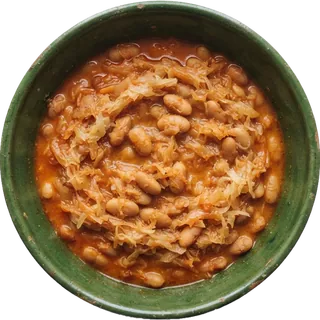
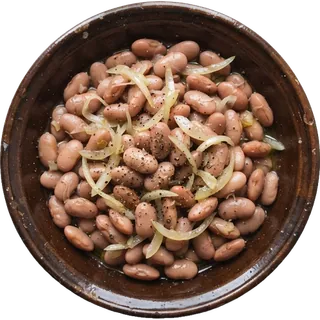
Fižol in kaša is a thick pot of dried beans cooked together with buckwheat or barley groats until both break down into one dense mass, softened with onion and oil. It is a Lenten dish from the Škofja Loka area, eaten in place of meat.
How to order
Prosim fižol in kašo.
The dish is naturally plant-based as traditionally made, so ordering it with the phrase “Prosim fižol in kašo” (beans and groats, please) is enough in most kitchens; it is worth confirming that no zabela of lard, cracklings, butter or cream has been stirred in before serving.
History
Fižol in kaša is documented in ethnographic records from the Škofja Loka area as a dish households prepared during Lent, when meat and animal fat were set aside under the fasting calendar. Dried beans are cooked slowly with buckwheat or barley groats until both soften into one thick mass, with onion softened in oil stirred through for flavor. The dish belongs to a wider regional repertoire of grain-and-legume pots eaten in winter and early spring, valued for using stored, inexpensive staples when fresh produce was scarce and dietary rules excluded richer additions.
Everything in this pot is plant in origin: beans, groats, onion and the oil used to soften it. Groat dishes in this region are commonly finished with a zabela, a dressing of lard, pork cracklings, butter or cream stirred in after cooking, but fižol in kaša developed specifically as Lenten food, so that final step is left out by recipe rather than by request. Because the fat is absent from the base and never added before serving, nothing needs to be asked about at the table in a household kitchen; in a restaurant kitchen the only thing to confirm is that the cook has not reintroduced a zabela out of habit when preparing it outside the fasting season.
Where to get it
It is served in home-style gostilne and on tourist farms around Škofja Loka and the Poljane and Selška valleys in Upper Carniola, most commonly in the weeks before Easter when the Lenten calendar is still observed.