Gomadōfu
Sesame ground to a paste with a mortar for the best part of an hour, cooked with kudzu starch and set in a mould — no soy and no curd, despite the name, and the first dish served at a monastery meal.
How to order
胡麻豆腐をください。
Sesame and root starch. It comes from a cuisine with no animal food in it at all, so the sauce on the plate is soy rather than stock.
History
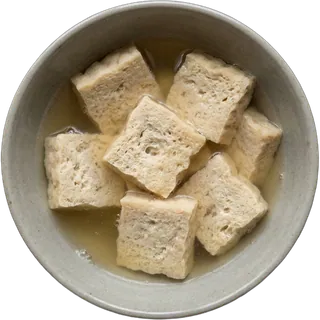
Gomadōfu originated in Kōyasan, Wakayama’s monastery kitchens, where meat, fish, and dashi were forbidden. Hand-ground raw sesame paste is cooked with kudzu starch and water until thickened, then set in a mould, giving a sliced, jellied appearance resembling soy tofu, though its texture comes from starch and seed fat, not curdled soybean milk.
As a shōjin ryōri dish of Kōyasan, usually the opening course, gomadōfu excludes all animal flesh and stock. Its sauce is soy-based, not bonito-based, and its core ingredients — sesame, kudzu, water, salt — are plant matter; wasabi and soy sauce are added only as condiments.
Where to get it
The temple lodgings on Kōyasan, where it is made fresh each morning, and Kansai food halls.