Halwa Omani
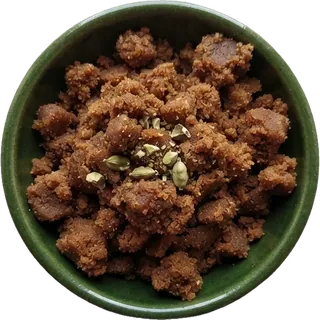
Oman’s national sweet: a dense, glossy paste of starch and sugar cooked for hours in a vast copper cauldron, scented with rose water, saffron and cardamom. Barka, south of Muscat, is its acknowledged capital.
How to order
هل هذي الحلوى معمولة بالسمن النباتي؟
Ask whether the batch is made with vegetable ghee rather than animal ghee: “هل هذي الحلوى معمولة بالسمن النباتي؟” Many producers, including the larger ones, already use vegetable ghee or oil as a matter of course.
History
Halwa Omani is cooked in Barka and elsewhere in a mirjal, a copper cauldron set over a wood fire, the mixture stirred without pause by hand with a long wooden paddle until it thickens into a dark, glossy mass. Rose water, saffron and cardamom go in for scent and colour, almonds for crunch, and the finished sweet is the standard offering to any guest, set down beside the coffee pot.
Starch, sugar, water, rose water and almonds are all plant. The traditional binder is ghee, which is not, but vegetable ghee and plain oil have become common substitutes, including at some of the larger commercial halwa makers, so a vegetable-based batch is often simply what is on offer rather than a special request.
Where to get it
Halwa houses and shops in Barka and across Oman, sold by weight year-round, and offered with coffee to guests in homes and at weddings and gatherings.