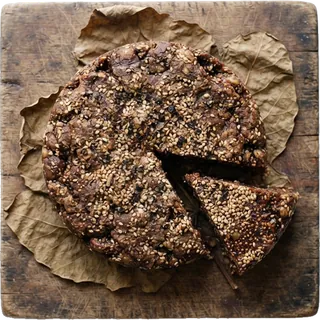
Hortopita Ipeirotiki
A hand-rolled pie from the mountains of Epirus, filled with wild greens gathered from the surrounding slopes and layered between thin sheets of dough.
How to order
Είναι η χορτόπιτα νηστίσιμη;
Ask using the phrase “Είναι η χορτόπιτα νηστίσιμη;”, which asks whether the greens pie is made in the Lenten way, and confirm that olive oil, not butter, was brushed between the sheets and that no feta was mixed into the greens.
History
Hortopita ipeirotiki comes from Epirus, in northwestern Greece, where households and village bakeries make it through winter and spring when wild greens are abundant on the mountain slopes. Cooks gather a mix of chicory, dandelion, nettles, and other foraged greens, chopping them with onion and herbs before layering them between hand-rolled sheets of dough. The exact mixture changes with the season and with what each family finds nearby, so no two batches are identical. The pie is baked in a wide round tray and cut into pieces for serving, eaten as a main dish rather than a side.
The greens filling itself is plant-based: greens, onion, herbs, and olive oil need no animal input. The uncertainty lies in the dough sheets and sometimes the filling as prepared in Epirus, where butter is often brushed between the layers instead of olive oil, and feta cheese is frequently mixed into the greens for flavor and moisture. Both additions happen during cooking, before the pie reaches the table, so they cannot be removed afterward. A version made entirely with olive oil and without cheese exists and is called the Lenten or nistisimi style, but whether a given pie follows it has to be confirmed with the cook or the seller before ordering, since the two versions can look identical once baked.
Where to get it
Sold in bakeries, village tavernas, and home kitchens across Epirus, in northwestern Greece, most commonly during Lent in the weeks before Easter, though many bakeries also carry it through the rest of the year.