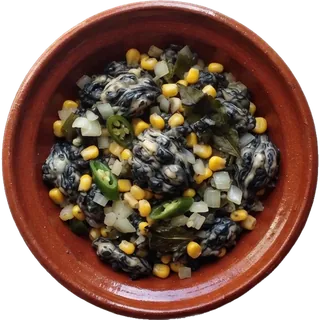
Huauzontles en Caldillo
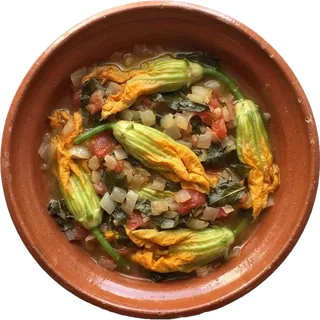
Bundles of huauzontle — the flowering heads of a relative of amaranth and quinoa — parboiled and set to simmer in a tomato-chile broth. The branch is held like a corn cob and the tiny green buds are stripped off between the teeth, the stem discarded like a fish bone.
How to order
Una orden de huauzontles en caldillo, por favor.
Ask whether the bundles are capeados: “¿Los huauzontles están capeados con huevo y rellenos de queso, o van solos en el caldillo?” Plenty of Lenten kitchens serve them plain, straight from the parboiling water into the broth.
History
Huauzontle grows around Xochimilco and Tláhuac and through the Puebla valley, where its clustered flowering heads are cut, parboiled and bundled with thread before cooking. It is eaten chiefly during Lent, when households turn away from meat and toward dishes built on the lake-bed vegetables and grains of the valley.
The dish that most people know dips the bundles in beaten egg, packs them with cheese and fries them before they reach the broth, and the egg and cheese are the only animal matter in it. Served plain — parboiled and lowered straight into the tomato-chile caldillo without the batter — huauzontles are wholly plant, and some Xochimilco kitchens cook them exactly this way through Lent rather than as an exception to the capeado version.
Where to get it
Market fondas and home kitchens around Xochimilco, Tláhuac and the Puebla valley, mainly through the weeks of Lent.