Jowar Bhakri
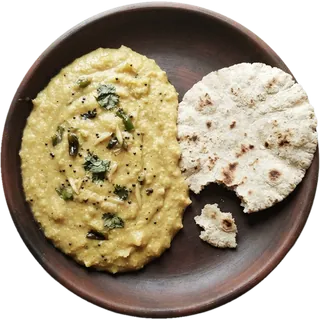
Jowar bhakri is a round flatbread made from sorghum flour, patted by hand on a cloth or board and cooked on a tawa before being held briefly over an open flame until it puffs. It is a staple across Solapur district and the wider Deccan plateau of Maharashtra.
How to order
कृपया दोन ज्वारीच्या भाकरी द्या.
At the counter, confirm the bhakri is served without a ghee finish by saying ‘भाकरीला तूप लावू नका.’ (please do not smear ghee on the bhakri), since many stalls apply it automatically after the bread comes off the flame.
History
In Solapur district and across the Deccan plateau of Maharashtra, jowar bhakri is made daily in households where sorghum is grown as the dominant rabi-season grain. Cooks mix jowar flour with water and salt into a stiff dough, pat it directly by hand into a round disc without a rolling pin, and cook it first on a tawa before passing it over an open flame so it puffs. The bread is documented as the everyday staple of the region from the nineteenth century, eaten with pulses, vegetables, and chutneys at the midday and evening meal, and remains common in Solapur, Sangli, and Marathwada markets and thalis today.
The standard dough contains only jowar flour, water, and salt, with no dairy, ghee, or other animal ingredient used in mixing or cooking the bhakri itself. Diners should still watch what accompanies it at the table: households and mess kitchens in Solapur commonly finish the hot bhakri with a smear of ghee or a spoon of white butter before serving, and side dishes such as pithla or vegetable preparations may include curd or ghee as a tempering fat. Asking for the bhakri plain, without the final smear, is the one adjustment needed to keep the full meal plant-based.
Where to get it
Jowar bhakri is sold at roadside thali messes, home-style restaurants, and lunch counters across Solapur, and is made fresh in households throughout the sorghum-growing districts of Maharashtra, especially during the rabi harvest season.