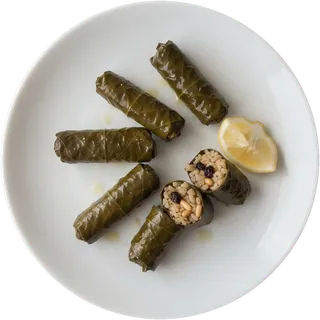
Kaşkarikas
Kaşkarikas is the peel of the courgette, usually cut away and discarded, sliced into strips and simmered slowly in olive oil with lemon juice, tomato and dill. It is left to cool completely and served as a cold starter rather than a hot vegetable dish.
How to order
Bir kaşkarikas rica ederim.
Kaşkarikas is naturally plant-based, but asking “zeytinyağlı mı?” (“is it made with olive oil?”) confirms that no butter has been substituted, which happens only outside Sephardic kitchens.
History
Kaşkarikas is a Sephardic Jewish dish from Istanbul, prepared by the city's Ladino-speaking community, whose ancestors settled in neighborhoods such as Balat, Hasköy and later Şişli. The name comes from the Ladino kaşkarikas, close to the Spanish cáscara, meaning peel or rind. Cooks save the courgette skins left over once the flesh has gone into another dish, cut them into strips, and simmer them in olive oil with lemon juice, chopped tomato, garlic and dill until soft. The result is cooled to room temperature or chilled and set out among the meze at the start of a meal, alongside dishes with similarly thrifty names in the same kitchen tradition.
Everything in the pot is plant: courgette peel, olive oil, lemon, tomato, garlic and dill. No butter, meat stock, yogurt or cheese enters at any stage, neither during the simmering nor at the table where the dish is finally served cold. Nothing here depends on a cook's choice of fat or a diner's request at the counter. The dish is plant-based by its own recipe, made that way long before anyone thought to ask, and there is no question left to settle before eating it.
Where to get it
It appears on meze tables in Istanbul's remaining Sephardic Jewish households and a few meyhanes in Şişli and Galata, most often in summer when courgettes are cheap and their peel still fresh.