Keppai Kali
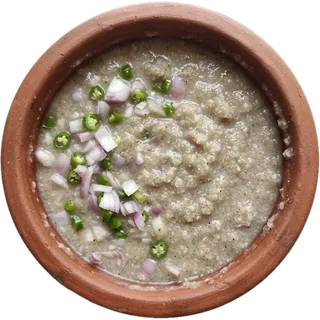
Keppai kali is finger millet flour stirred into boiling water until it sets into a stiff, dark mass, then shaped into a mound or balls and eaten with a sharp gravy or spiced buttermilk. It is everyday food across the dry-farming tracts of western Tamil Nadu, from Salem to Coimbatore.
How to order
ஒரு கேழ்வரகு களி குடுங்க
At a counter it helps to confirm the side gravy before ordering, asking ‘நெய் போடாம குடுங்க’ — give it without ghee — so the tadka is done in oil instead.
History
Finger millet, called kelvaragu or keppai in Tamil, has long been grown as a rainfed crop in the dry belts of Salem, Dharmapuri, Erode and Coimbatore districts, where colonial-era agricultural reports from the late 19th century already list it as a principal dryland grain alongside sorghum and pearl millet. Kali made from this flour is recorded in Tamil household cookbooks and district gazetteers from the early 20th century as a midday meal for field workers and cooks in these tracts, prepared fresh each day since the flour does not keep well once mixed with water.
The standard preparation uses only finger millet flour, water and salt, boiled and beaten into a mass with no dairy, egg or any other animal ingredient entering the dough itself. What a diner should check instead is what comes alongside it: the kuzhambu or gravy served with kali is sometimes finished with a ghee tadka, and some households serve it with spiced buttermilk, which is dairy. Asking the cook for an oil-tempered gravy and plain water or tamarind-based accompaniment instead of buttermilk keeps the full meal plant-based.
Where to get it
Roadside tiffin stalls and small eateries in Salem, Dharmapuri, Erode and Coimbatore serve keppai kali at lunchtime, often alongside a thin tamarind gravy; millet-specialty restaurants in Chennai and Coimbatore also list it, and it appears at millet food festivals and organic farm markets.