Kislo zelje
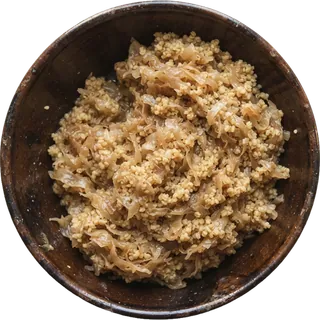
Kislo zelje is finely shredded cabbage that has been salted and packed into wooden vats to ferment slowly through winter, producing a sour, crisp condition eaten as a side dish or simmered into stews and soups.
How to order
Prosim kislo zelje.
The fermented cabbage itself contains no animal product, but ask for it without meat or fat by saying “Prosim kislo zelje.” and adding “brez mesa in brez zabele” so pork or a lard-based zabela is withheld from the start rather than removed after cooking.
History
Kislo zelje is fermented cabbage closely identified with Ljubljana and central Slovenia, where the Ljubljana marsh has grown cabbage suited to the process for generations. Households and farms there shred cabbage fine in autumn, layer it with salt in wooden vats, and press it down so brine rises and covers it; natural lactic-acid bacteria then ferment it through the winter months. The result is sliced or shredded cabbage with a sour taste and a firm, crisp texture, used as a side dish, a filling, or simmered into stews and soups through the colder season. The dish is also prepared elsewhere in Slovenia, though the marsh's cabbage fields remain its most noted source.
The fermentation itself involves only cabbage and salt, sometimes with caraway seed or a bay leaf added for flavor; nothing in the vat derives from an animal. What changes the dish is what joins it afterward, when it is cooked or served: smoked pork or lard is commonly added to the pot, and in some households a final zabela of lard, cracklings, or butter is stirred in once the cabbage is heated through. Because the zabela is added at the end, it can be left off on request. Pork simmered in from the start cannot be removed afterward, so whether a given pot is plant-based has to be settled before it is cooked, not after.
Where to get it
Kislo zelje is sold at markets, grocers, and gostilne in Ljubljana and across central Slovenia, where the Ljubljana marsh is most associated with its cabbage and fresh autumn batches. It is available year-round but most actively made and sold from late autumn through winter.