Koruzni žganci
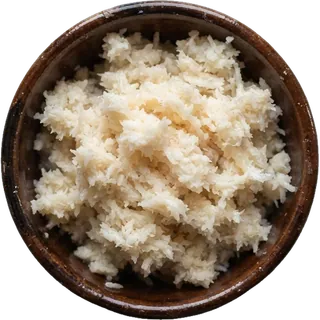
Koruzni žganci are a crumbled maize-flour porridge, boiled to a thick mass and then broken apart with a fork into loose yellow crumbs. The dish is the maize counterpart to buckwheat žganci, softer and sweeter, served as a main course or side.
How to order
Prosim koruzne žgance brez ocvirkov in mleka.
Ask for the crumbs without any topping and without the milk bowl by saying “Prosim koruzne žgance brez ocvirkov in mleka,” since both are added after cooking and can be withheld rather than scraped off.
History
Koruzni žganci are cooked in Slovenj Gradec, in the Carinthia (Koroška) region of Slovenia, and are known throughout nearby Alpine valleys, where maize largely replaced buckwheat in poorer soils from the 18th century onward. Maize flour is stirred into boiling salted water until it sets into a dense mass, which is then broken into crumbs with a fork or wooden spoon. The dish is prepared in home kitchens and in mountain inns around Slovenj Gradec, usually as a filling main course, and is traditionally set beside soured milk or served with cooked cabbage.
The crumbs themselves are flour, water and salt, so the cooking pot holds nothing but plant matter. What turns the dish non-plant happens after the boiling is done: a zabela of cracklings, lard or butter is spooned over the finished crumbs, and a bowl of soured milk is set beside them rather than mixed in. Because both additions are made at the table rather than in the pot, the question that has to be settled is simply whether the topping is left off and the milk left unpoured — a request that, in this case, the kitchen can act on rather than merely a hope.
Where to get it
The dish is found at traditional inns (gostilne) and mountain huts (planinske koče) in and around Slovenj Gradec and the wider Carinthia region of Slovenia, most often on menus during the colder months when maize porridge is served as a warming main or side.