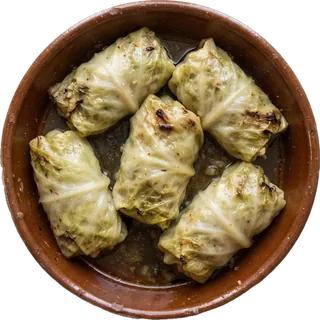
Mavrolahana me fasoulia
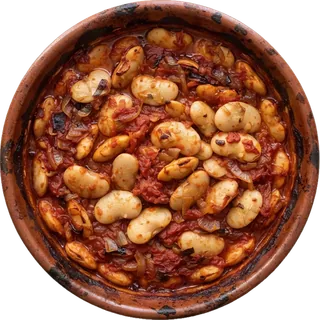
Mavrolahana me fasoulia is a Pontic winter dish of dark cabbage leaves stewed with white beans, onion and olive oil until the vegetables break down into a thick, dark pottage, eaten as a main course in the colder months of the Black Sea culinary tradition now continued in Greece.
How to order
Θα ήθελα μαυρολάχανα με φασούλια, παρακαλώ.
Order the dish by name: “Θα ήθελα μαυρολάχανα με φασούλια, παρακαλώ,” since the standard recipe already omits meat and dairy, and ask the kitchen to confirm that no feta or butter has been added as a finishing touch.
History
The dish originates with Pontic Greek communities from the Black Sea coast of northern Anatolia, who brought it to Greece after the population exchanges of the early twentieth century and settled it most firmly in Kozani and other parts of West Macedonia. Home cooks prepare it in winter, when dark cabbage is in season, simmering shredded leaves with soaked white beans, chopped onion and olive oil for an hour or more until the leaves collapse into the beans and the two can no longer be told apart on the plate.
Every ingredient in the pot is plant: cabbage, beans, onion and olive oil, with no stock, lard or cured meat added at any stage of cooking. The dish is traditionally made during the fasting weeks of the Orthodox calendar, when animal products are avoided by rule, so the recipe itself excludes them rather than relying on a diner's request. The only point left to settle is what accompanies it at the table outside fasting periods, such as bread spread with butter or a side of cheese, additions that occur after the pot is off the fire and can be withheld by asking.
Where to get it
It is found on winter menus at tavernas and home-style eateries across West Macedonia, particularly around Kozani, most often from late autumn through the Lenten fasting periods.