Migan de Fruit à Pain
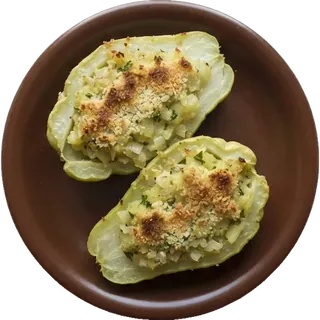
Breadfruit is boiled whole, peeled, then crushed in the pot with onion, garlic, thyme and chilli until it collapses into a dense, smooth purée. Guadeloupean households cook it on Sundays, especially when a backyard tree is fruiting heavily.
How to order
Ban mwen on pòsyon migan san vyann, souplé.
Ask before the pot goes on, since salt pork or pig's tail is usually dropped in while the breadfruit still boils and cannot be fished back out afterward: “Ban mwen on pòsyon migan san vyann, souplé.” A cook who hasn't started the pot yet can leave it out and use oil alone.
History
Migan is Guadeloupean Creole for a thick vegetable mash; fruit à pain is the French name for breadfruit, the tree brought from the Pacific to the Caribbean in the early nineteenth century specifically to provide a cheap, abundant food for enslaved workers on the estates. The tree took hold across Basse-Terre, especially around Capesterre-Belle-Eau, where it still fruits heavily from July to October. Households crush the boiled flesh in the same pot it cooked in, with onion, garlic, thyme and chilli, and the dish is Sunday food, made in quantity whenever a backyard tree drops more fruit than a family can eat whole.
The plant base is breadfruit, onion, garlic, thyme, chilli and oil, and many households make it exactly that way, particularly for a weekday meal. For Sunday lunch, though, most cooks drop in salt pork, a salted pig's tail or salted cod while the breadfruit boils, so the meat or fish flavors the mash from the inside rather than sitting on top of it. Once that has simmered in, it cannot be lifted back out, so the question has to be settled before the pot goes on, not after it is dished up.
Where to get it
Home kitchens across Basse-Terre on Sunday, and snack bars and market stalls in Capesterre-Belle-Eau and Pointe-à-Pitre, mainly when breadfruit is in season from July to October; a plate runs €4-7.