Mole Amarillo
A thinner, brighter mole than its black or red cousins, built from chilhuacle amarillo and guajillo chiles and thickened with masa, with the anise-like scent of hoja santa running through it. In Oaxaca it goes over vegetables, chochoyotes or meat, depending on the day.
How to order
¿Tiene el mole amarillo de vigilia, con verduras?
Ask specifically for the vigilia version — “¿Es de vigilia o lleva carne?” — since the same mole is served with chicken or pork, or built on a meat broth, outside fasting days.
History
Mole amarillo is one of the seven moles of Oaxaca, looser and lighter in body than the well-known negro or rojo. The colour and heat come from chilhuacle amarillo and guajillo chiles, the body from masa stirred in to thicken the broth, and the particular scent from hoja santa, the large anise-scented leaf used across the region. It is cooked both in home kitchens and by market cocineras, usually ladled over chochoyotes, meat, or a mix of vegetables.
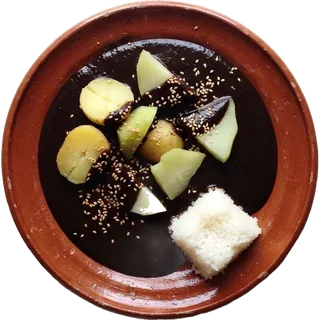
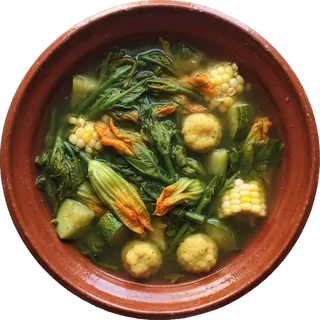
The chiles, masa, hoja santa and vegetables — potato, chayote, green beans — are all plant-based, and this is in fact the mole most often made during vigilia, the meat-free fasting days of Lent, for exactly that reason. Outside those days the same pot is just as likely to carry chicken or pork, or to be built on a meat broth rather than water, so the vigilia version needs to be asked for by name rather than assumed.
Where to get it
Market comedores and home-style kitchens across the Central Valleys of Oaxaca, most reliably vegetable-based during Lent and other vigilia periods.