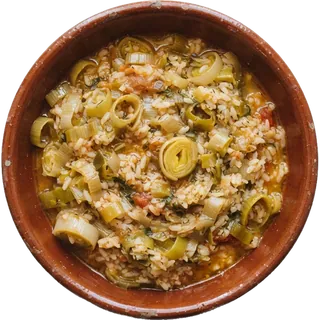
Perek
Perek is a layered Pontic Greek pastry made from dried flatbread sheets softened in the oven with a filling of greens or potato, or of cheese in the everyday version.
How to order
Είναι το περέκ νηστίσιμο;
To confirm the Lenten preparation, ask “Είναι το περέκ νηστίσιμο;”, which asks whether the perek is made without butter or cheese.
History
Perek comes from the Pontic Greek communities of the Black Sea region, later carried into Greece by refugees after 1922 and kept alive in households resettled across Central Macedonia. Cooks prepare it by drying thin pastry sheets on a satzi, a flat griddle set over an open hearth. The dried sheets are stacked later, layered with a filling, and moistened with liquid before baking in the oven until soft again. The dish is traditionally made at home, often for feast days or family gatherings, and the drying-and-reviving technique for the pastry is specific to Pontic cooking.
The Lenten version of perek is plant-based throughout: the sheets are flour, water and salt, and the filling is greens or potato, with no dairy or butter at any stage. The everyday version departs from this during cooking, not at the table, at two points: the sheets are brushed with butter before baking, and cheese is mixed into the filling itself. Because both versions can look alike once baked and sliced, the only way to know which is on the counter is to ask directly whether the preparation on offer is the butter-and-cheese version or the meat-and-dairy-free one.
Where to get it
Perek is sold in bakeries and home-style tavernas run by Pontic Greek communities in Central Macedonia, and appears most often around Lent and other fasting periods, when the meat-and-dairy-free version is made.