Puli Jiaobaisun
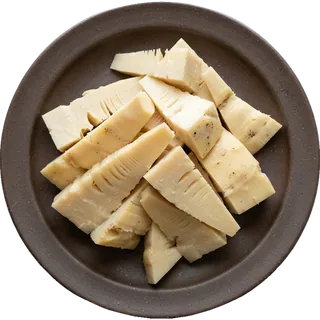
Jiaobaisun is the swollen white stem of a marsh grass, thickened by a smut fungus, grown in the flooded fields of Puli in Nantou and usually steamed, boiled or grilled in its husk and eaten plain or lightly stir-fried.
How to order
老闆,一份清炒茭白筍。
A plain-fried or boiled shoot is just the vegetable, but a stir-fry is routinely started with pork slivers or dried shrimp, so say 「不要加肉絲和蝦米」, meaning without pork shreds and dried shrimp.
History
Puli's basin has steady temperatures and abundant clean water, and from the 1970s growers there shifted river-side paddies out of rice and sugarcane into water bamboo as it became the better return. The town now carries the great majority of Taiwan's crop, with planting around 1,800 hectares in some years and annual output in the tens of thousands of tonnes. Work by an agricultural research institute scientist with Puli growers established night lighting of the fields, which lifted harvests from two a year to as many as four and put fresh shoots on sale year-round. The town and the Puli Farmers' Association have run a water bamboo festival since 2007.
The shoot is a vegetable and nothing else, and the way it is handled in Puli keeps it that way: the agriculture agency advises cooking it in its own husk, steamed in a rice cooker, simmered in water or baked, because the husk holds the sweetness in. Eaten like that it is plant-based throughout, with soy sauce or sesame dressing alongside. The animal ingredient enters in the restaurant stir-fry, where shredded pork, dried shrimp or a sakura-shrimp chilli paste is fried off first to season the oil. Ordering it plain-fried with garlic, or simply boiled, removes that step.
Where to get it
Sold year-round at the Puli Farmers' Association and at roadside stands and markets around the town's water bamboo fields; also at stalls at the water bamboo festival held with the county each year, and on the produce tables at the Sun Moon Lake black tea season in neighbouring Yuchih.