Sanna
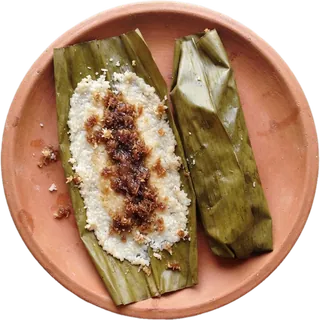
Sanna are soft steamed rice cakes from Goa, their crumb full of tiny air pockets from a slow fermentation. Made from ground rice and coconut raised with palm toddy, they are a tangier, lighter cousin of idli, usually eaten with a vegetable sabzi or alongside sorpotel.
How to order
क्या मुझे एक सन्ना मिल सकता है?
Sanna is traditionally a steamed rice cake leavened with toddy and needs no dairy at all, but it's worth checking since some stalls brush the steamer or finished cakes with ghee, so ask ‘क्या इसमें घी तो नहीं डाला गया है?’. If it's served with coconut chutney or a side sabzi, confirm that too, as butter sometimes finds its way into the accompaniment rather than the sanna itself.
History
Goan Catholic households make sanna as the rice-cake accompaniment to Sunday meals and feast-day spreads, the batter left overnight to rise with toddy tapped from coconut palms along the state's backwaters. Where idli relies on wild lactic-acid fermentation alone, sanna is commonly lifted by the yeasts and sugars in toddy, though many households now use a toddy-based starter, baker's yeast, or coconut-feni lees when fresh toddy is not to hand. The result is a sweetish tang and a feather-light crumb, a method that travelled with Goan cooks to Mumbai and the Gulf, where substitutes for fresh toddy are common.
Ground rice is soaked and blended with grated coconut and a little toddy or starter, then left to ferment before being steamed in small moulds; rice, coconut and palm toddy make up the batter, with no animal ingredient among them, and the cakes are cooked in coconut oil or a neutral oil such as groundnut. At restaurant tables and festive spreads, though, a melted ghee finish is sometimes brushed over the cakes before serving, and curd is often offered as a side dish rather than mixed in, so a diner wanting a plain version should ask for sanna served without ghee and with the curd kept separate.
Where to get it
Goan Catholic households, bakeries and breakfast stalls across Goa, especially around Panjim and Margao markets, as well as Goan-run cafés in Mumbai and the Gulf; sold alongside sorpotel or a vegetable sabzi, or eaten plain with chutney.