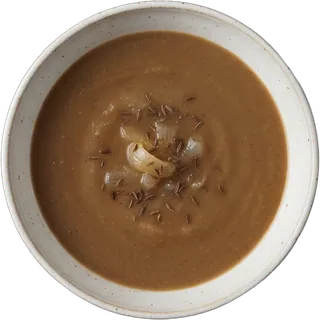
Steirische Käferbohnensuppe
A thick soup built on the bean cooking water itself, thickened with a roux and seasoned with savory, marjoram and bay — long a Good Friday dish in parts of Styria.
How to order
Geht die Käferbohnensuppe auch ohne Speck und ohne Rahm, nur mit Öl eingebrannt?
Ask for the roux made with oil rather than lard, and for the soup without bacon cubes and without the finishing sour cream.
History
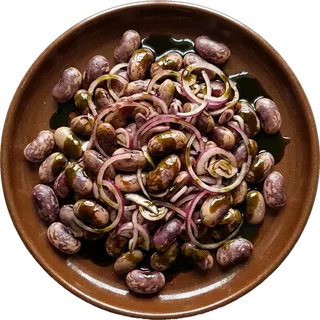
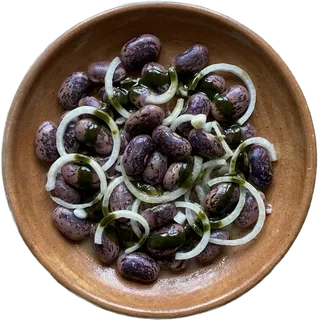
Where the salad uses the beans, the soup uses the liquid. Käferbohnen are soaked overnight and simmered an hour and a half in their own soaking water with savory or bay and a pinch of sugar; the beans come out for salad or spread and the dark, starchy water becomes the soup, bound with a light flour roux and finished with parsley. The method is set down the same way in Styrian producer literature and in the cross-border Interreg handbook on the Steirische Käferbohne g.U., which treats bean water as an ingredient rather than waste.
The soup sits in the Lenten half of the Styrian year. Meat was scarce in the Styrian countryside into the 19th century because of dues owed to landlords – Sunday meat, occasionally bought beef – and the fasting repertoire leaned on flour and pulses. Households in the bean-growing districts still cook a large pot on Good Friday, using part of the beans for the soup and the rest for salad at the same meal.
The core is bean, water, flour and herbs. What makes most restaurant versions non-vegan is the fat the onion is fried in — pork lard is traditional — and the smoked bacon or spoon of sour cream some cooks add at the end. Sunflower oil in the roux and no cream leaves a soup that is arguably closer to the old fasting version than the modern one.
Where to get it
Country Gasthäuser in the Südost- and Südsteiermark, especially around Lent and Good Friday; bean farms around Riegersburg and the Vulkanland sell the beans to cook it at home.