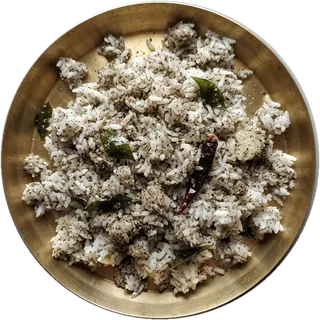
Thengai Sadam
Thengai Sadam is cooked rice tossed with grated coconut fried in oil along with cashew, mustard seed and curry leaf, served across Tamil Nadu as a lunch dish, temple offering and travel food packed for train journeys.
How to order
ஒரு தேங்காய் சாதம் கொடுங்க
At a temple counter or festival stall, ask the cook to make it without ghee by saying ‘நெய் போடாம செய்யுங்க’, meaning 'please make it without ghee'; household and roadside versions use oil by default.
History
Thengai sadam is documented from household and temple kitchens across Tamil Nadu, including Kumbakonam, Madurai and Srirangam, as part of the one-pot rice preparations served at midday meals and as prasadam after temple rituals. Cooks grate fresh coconut, fry it in oil with mustard seed, split urad dal, chana dal, dried red chilli and curry leaf, then fold the mixture through cooked rice, often the previous day's leftover rice cooled and loosened with oil. It travels well, wrapped and carried for train and bus journeys, and is served at marriage feasts and temple festivals alongside other rice preparations such as puliyodharai and thayir sadam.
The label on thengai sadam is naturally vegan: the standard recipe fries the coconut and tempering in sesame or groundnut oil, with no dairy ingredient in the method itself. In some temple kitchens, cooks substitute ghee for part or all of the frying oil, particularly for the prasadam version offered at the sanctum before being distributed to devotees, since ghee is considered an offering-grade fat in temple cooking. A diner who wants the plant-based version at a temple counter or festival stall asks whether the rice was fried in oil or ghee; roadside messes and household versions almost always use oil as a matter of course, not substitution.
Where to get it
Thengai sadam is sold at vegetarian messes, railway-station and bus-stand food stalls, and temple prasadam counters across Tamil Nadu, and appears on home and wedding-feast menus alongside other rice preparations, particularly during temple festival seasons.