Zılbıt
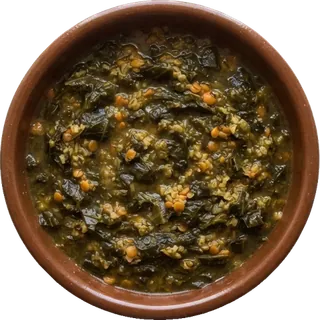
Zılbıt is a pan of wild greens gathered in the forests above Zonguldak, wilted with sliced onion in a skillet until soft and dark green, eaten hot with bread.
How to order
Yumurtasız zılbıt yapar mısınız lütfen?
Ask for it “yumurtasız” — without egg — since the egg is usually stirred into the pan rather than added at the table. Confirming before cooking begins matters, because once the egg sets among the greens it cannot be picked out.
History
Zılbıt comes from the forest villages of Zonguldak, on the western Black Sea coast, where the plant itself is called hodran. Women and men gather the young shoots in April and May, after the first clearing of the beech and hazel woods, washing them several times to strip the bitterness. The leaves are chopped and set to wilt in a wide pan with sliced onion and a spoon of fat, cooked slowly until the greens collapse into a dark, soft mass. In most kitchens an egg or two is broken directly into the pan near the end, stirred through so it sets among the greens rather than sitting on top.
The greens, onion and frying fat are plant in origin; the oil used is traditionally sunflower oil or butter, either being acceptable to swap. The egg enters during cooking, not at the table, cracked straight into the pan and stirred through the wilted leaves until it sets around them. Because it is folded in rather than ladled on afterward, it cannot be lifted out once cooked, so whether a plate is plant-based has to be settled before the pan goes on the stove. A cook asked in advance can simply leave the egg out and finish the dish with the greens and onion alone.
Where to get it
Zılbıt is served in village lokantas and home kitchens around Zonguldak from April through May, when hodran is in season in the surrounding beech and hazel forests.