Abısta
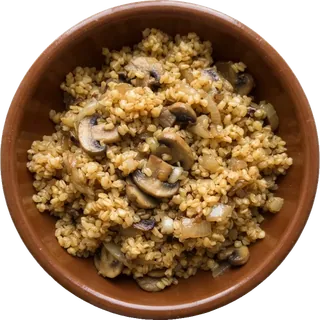
Abısta is a firm, cooked cornmeal porridge, mixed with water until stiff enough to hold its shape and sliced at the table with a knife dipped in water.
How to order
Bir abısta alabilir miyim, peyniri ayrı koyar mısınız lütfen?
Ask for it without the cheese by saying “peyniri koymayın”, or request it on the side with “peyniri ayrı koyar mısınız”, since the cheese is only laid on top at the end, not cooked into the porridge.
History
Abısta comes from the Circassian communities of Eskişehir province, descendants of Caucasus migrants who settled there in the nineteenth century. It is a cornmeal and water porridge, worked over heat with a wooden paddle until it pulls away from the pot sides and sets firm enough to cut with a wet knife rather than spoon out. Circassian home cooks make it most often, as a stand-in for bread at a table that also holds soup, meat and pickles. In Adyghe, the language many of these families still speak, the dish is called paste; abısta is its Turkish rendering, the name used on restaurant menus in Eskişehir and in nearby Sakarya and Düzce.
The porridge itself is plant: corn flour and water, nothing else goes into the pot. The animal product is a block of fresh Circassian cheese, unmelted or barely softened, set on top of the hot abısta just before it reaches the table; this happens at serving, not during the cooking of the porridge. Because the cheese sits on top rather than being stirred in, the dish can be ordered or plated without it, provided whoever ladles it onto the plate is told so beforehand. Where the cheese has already been pressed into the surface before it leaves the kitchen, there is less to do about it after the fact.
Where to get it
Found in Circassian village homes and a handful of Eskişehir and Sakarya restaurants serving Caucasian food, available year-round, though most often made right after the autumn corn harvest.