Allerheiligenstriezel
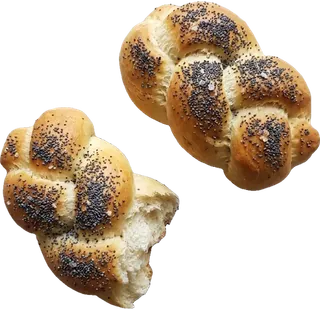
A braided yeast loaf given on All Saints' Day — by godparents to godchildren, and once by farmers to the poor who came to the door.
How to order
Haben Sie einen Allerheiligenstriezel ohne Ei und Milch?
The traditional loaf is enriched with egg, butter and milk; ask your bakery for a plant-based braid, increasingly offered around 1 November.
History
The first traces of the Heiligenstriezel appear at the end of the 17th century, with a document from Upper Austria in 1699; the scholar Johann Siegmund Valentin Popowitsch described it around the mid-18th century as a loaf pointed at both ends and broken open in the middle, baked on the eve of All Saints. The plait itself is older than Christianity, read as a mourning gesture — hair cut and braided for the dead.
For centuries it was Armenbrot. Hundreds were baked in the days before the feast, and on the eve the Striezelbettler went from house to house praying for the dead in exchange for a loaf; a large crowd of them was taken as the sign of a blessed year. That custom died out around 1900, but the Godntag did not: godparents still bring their godchild a Striezel, in Styria as big as the child, in Burgenland once given by young men to the girl they were courting, in the Weinviertel played for with dice at the Striezelpaschen.
It began as a plain loaf of wheat, honey and fat, and became a milk bread with butter, eggs and raisins. The plait and the custom survive either way: Austrian bakeries now braid vegan Striezel with plant milk and oil for the same Godntag.
Where to get it
Bakeries across Austria in the last days of October and on 1 November.