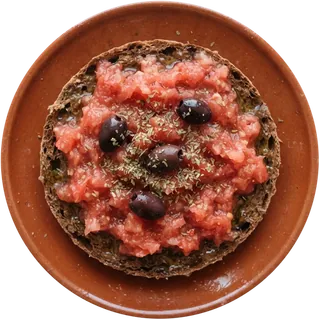
Askordoulakoi
Askordoulakoi are wild tassel-hyacinth bulbs, dug in winter and boiled through repeated changes of water to remove their natural bitterness, then preserved in vinegar and olive oil and served cold as a meze.
How to order
Θα ήθελα ασκορδουλάκους, παρακαλώ.
The dish contains no animal ingredients by default, but stating “Θα ήθελα ασκορδουλάκους, παρακαλώ” (“I would like askordoulakoi, please”) is enough to order it, since it is served plain and not combined with any other preparation.
History
Askordoulakoi is a winter meze from Crete. It is made from the small bulbs of the wild tassel hyacinth, Leopoldia comosa, locally called volvoi. Foragers dig the bulbs from rocky hillsides in late autumn and winter, while the plant is dormant and the bulbs are firm. Home cooks and taverna kitchens boil the bulbs through several changes of water to draw out their sharp bitterness, then peel them and store them in a mixture of vinegar and olive oil. The result is eaten cold, typically as one dish among several on a meze table, in villages across the island.
Every component of the dish is plant-based: the bulbs, the water used for boiling, and the vinegar and olive oil used for preserving and dressing. No animal product is introduced during cooking, and none is added afterward, since the dish is served on its own as a standalone meze rather than topped with a sauce or garnish. Because no stage of preparation calls for an animal ingredient, there is no point at which one could be substituted or withheld. The dish is plant-based by its basic composition, not by any request made at the table.
Where to get it
Tavernas and meze bars across Crete serve it, most often in winter and early spring, when foragers bring in the freshly dug bulbs.