Stamnagathi
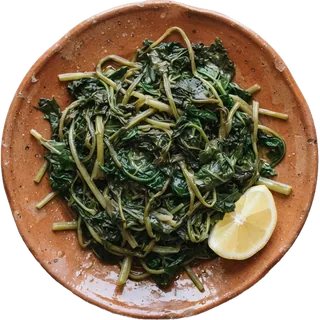
Stamnagathi is spiny chicory (Cichorium spinosum), a wild bitter green gathered on Crete's hills, served boiled as a salad or briefly braised in olive oil as tsigariasto.
How to order
Θα ήθελα σταμναγκάθι, παρακαλώ.
To order the plain version, say “Θα ήθελα σταμναγκάθι, παρακαλώ” and ask that it come dressed with only olive oil and lemon, without cheese or egg added at the table.
History
Stamnagathi grows wild on rocky slopes and terraces across Crete, gathered mainly in late winter and spring before flowering, when the leaves are tender. Cretan households and tavernas prepare it two ways: boiled until tender and dressed with olive oil and lemon as a salad, or cut and cooked briefly in olive oil, sometimes with a little water, as tsigariasto. The plant has no formal protected-origin status, but its link to Cretan foraging and diet is documented in regional cookbooks and agricultural surveys of wild greens, horta, collected on the island.
Everything in the pot is plant: the chicory itself, the olive oil it is cooked in, and the lemon juice added at the end. No animal product enters during cooking. Snails, lamb, or an egg omelette sometimes served alongside or as part of the same meal are separate preparations, not stamnagathi itself, so the dish as such requires no adjustment. What must be settled, if anything, is whether a kitchen adds a topping or serves it beside another course; asking at the table confirms this, since the base recipe contains no such addition to begin with.
Where to get it
Stamnagathi is sold at tavernas and local markets across Crete, particularly in rural parts of Chania and Rethymno, with fresh leaves most available from late autumn through early spring.