Balah
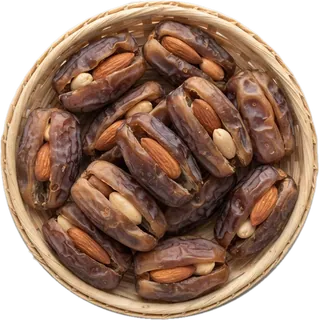
Balah are dates dried whole in the sun on palm-frond mats across Kharga and Dakhla, then sold loose by the kilo from sacks at local markets. The flesh turns deep brown and dense, with a caramel taste that comes from the fruit's own sugar concentrating as it dries.
How to order
ممكن كيلو بلح لو سمحت
Balah needs no check since it is just dried fruit, but if a seller offers a glazed or stuffed version it is worth asking ‘ده بلح عادي ولا فيه حاجة تانية؟’ to confirm nothing else was added.
History
Kharga and Dakhla, the two largest settlements of the New Valley, sit on a belt of date palm groves fed by local wells and springs. Growers lay the ripe fruit on palm-frond mats in open yards through September and October, turning it daily so it dries evenly before the autumn humidity rises. Dried dates are stored in sacks or tins and sold through the winter at markets in Al Kharijah and Mut, and along the road stalls that serve traffic between the oases and the Nile Valley.
Balah is the date fruit itself, picked, dried and sold with no other ingredient added. Nothing enters the process beyond sun, air and the palm-frond mat the fruit rests on. Some sellers separate grades by variety and size, but none of the oasis date varieties are treated, glazed or packed with any additive, so the naturally vegan status holds across the ordinary range sold in Kharga and Dakhla.
Where to get it
Sold loose by the kilo from sacks and crates in the markets of Al Kharijah and Mut, and from roadside stalls along the routes linking Kharga and Dakhla to the Nile Valley, mainly from autumn through winter after the harvest.