Basler Brot
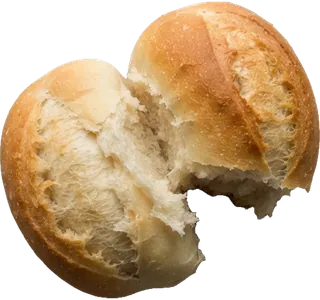
A dark, heavily floured loaf built from two stacked rounds, baked in Basel bakeries to a crust thick enough to crack when cut, with a close, sour crumb underneath.
How to order
Ich hätte gern ein Basler Brot, bitte.
Buy the loaf whole rather than from the pre-cut counter tray, where halves are often already spread with butter for sandwiches; if unsure, ask the baker ‘ist es ungebuttert?’ (is it unbuttered).
History
Basler Brot took its present form in the bakeries of Basel in the 19th century, when the city's guild bakers each kept a house sourdough culture and produced a daily loaf distinct from the thin-crusted breads of the surrounding countryside. The loaf is built from two pieces, a larger base round with a smaller round set on top before baking, and is dusted thickly with flour so the crust splits into a pale, floury pattern as it bakes. It was sold whole or by the half at bakery counters in Basel-Stadt and Basel-Landschaft and eaten as the ordinary bread of working households, not a feast-day item.
The dough is wheat flour, rye flour, water, salt and a sourdough starter, with no fat worked in, so the loaf is naturally plant-based as baked. Where dairy enters this cuisine is after the oven: Basel households and cafés commonly slice the bread open and spread it with butter, and lunch counters sometimes pre-butter halves for sale. A diner buying the loaf whole gets a plant-based bread by default; the thing to check is whether the piece on offer has already been split and buttered before it reaches the counter.
Where to get it
Bakeries across Basel-Stadt and Basel-Landschaft bake it fresh each morning year-round, and it is a regular sight at Saturday stalls in the Markthalle Basel.