Belloh
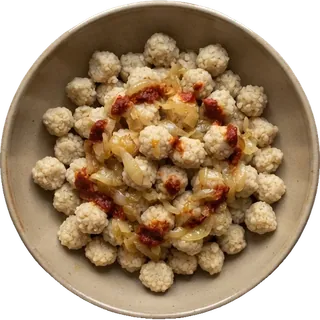
Belloh is a small, hand-pressed patty of red lentils and fine bulgur, kneaded with onion and red pepper paste until it holds its shape, then flattened between the palms and served cold or at room temperature.
How to order
Bir porsiyon belloh alabilir miyim?
Belloh carries no animal product by recipe, so there is nothing to confirm with the person behind the counter. A cook who wants to reassure a customer anyway will usually just say it is made “et ve süt ürünü olmadan” (without meat or dairy products).
History
Belloh is made in Mardin province and across the Tur Abdin plateau in southeastern Turkey, in the kitchens of Syriac Christian households in Mardin, Midyat and the villages around them. Red lentils are boiled soft, drained, and worked by hand with fine bulgur, finely chopped onion, and a paste of red pepper and tomato, until the mixture is firm enough to press into small ovals in the palm. In Syriac the dish is called belloh; in Turkish it appears on menus as mercimekli köfte, a plainer, descriptive name that does not carry the fasting association the Syriac word does.
Everything in the bowl is plant: lentils, bulgur, onion, pepper paste and tomato paste, bound with olive oil and lemon juice, with no stock, butter or dairy at any stage of the cooking. The dish was built this way on purpose, for the fasting calendar of the Syriac Orthodox church, when meat, dairy and eggs are set aside for weeks at a time, including Great Lent before Easter and the weeks before Christmas. Because the fast is the reason for the recipe rather than an afterthought, there is no point in the kitchen or at the table where an animal product could enter, and no question for a customer to settle by asking.
Where to get it
Belloh appears most often in Mardin and Midyat during the weeks of Great Lent before Easter and the fast before Christmas, served in Syriac Christian homes and in a handful of esnaf lokantası in the old city of Mardin.