İrok
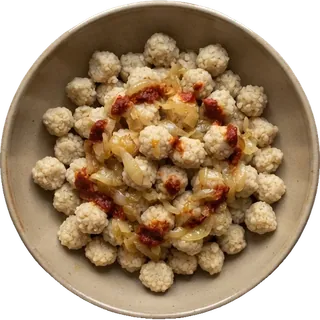
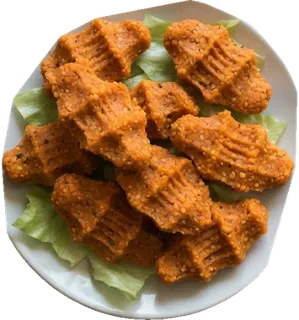
İrok is a torpedo-shaped shell of fine bulgur dough, closed around a filling and cooked by boiling or frying. The filling changes with the religious calendar, built from lentil, mushroom or walnut in fasting weeks and from minced lamb the rest of the year.
How to order
Oruçluk irok var mı, lütfen?
“Oruçluk” means made for the fasting weeks; asking for “oruçluk irok” asks for the lentil, walnut and mushroom filling rather than the minced lamb version. That filling is only made during the Syriac Orthodox fasting calendar, not year-round.
History
İrok comes from Mardin province in southeastern Turkey, cooked in Syriac Orthodox (Süryani) households and in the kitchens of Arabic- and Kurdish-speaking neighbors who share the city. The shell is made from fine bulgur worked into a smooth, elastic dough, pressed thin and closed around a filling, then boiled or fried until the surface sets. Arabic speakers in the region know a similar stuffed dumpling as kübbe or kibbeh, and Turkish speakers call the wider family of stuffed bulgur shells içli köfte; irok is the Mardin version tied specifically to the Syriac liturgical calendar, and the name itself is Syriac rather than Turkish or Arabic.
The shell is bulgur, water, and a little onion and spice, plant matter throughout. The filling is where the animal product enters: in Syriac Orthodox fasting weeks cooks fill the shells with lentils, chopped walnuts or mushrooms, and outside those weeks the same shells are filled with minced lamb. The filling goes in before the shell is closed and before it is boiled or fried, never added afterward, so nothing can be adjusted at the table. Outside the fasting calendar the lamb filling is the standing default, already sealed inside by the time it reaches a plate, and asking at that point changes nothing; the plant filling exists only during the fasting weeks themselves.
Where to get it
İrok is found in Mardin's old city and in Midyat, in Süryani-run kitchens and lokantas, mainly during the fasting weeks of the Syriac Orthodox calendar, which fall at several points in the year including before Easter and before Christmas.