Bore Baasi
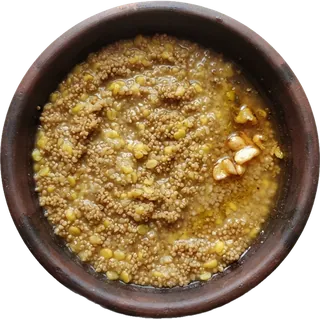
In Raipur district households, cooked rice is covered with water and left overnight until it turns faintly sour, then eaten at dawn with raw onion, green chilli and salt before the day's field work begins.
How to order
एक कटोरी बोरे बासी दीजिए।
The plain bowl is already free of dairy, but if curd has been added it will be visible on top, so it is worth asking ‘घी या दही पड़ा है?’ before eating.
History
Bore baasi is everyday food in Chhattisgarh's Raipur district, where households cook rice the previous evening, cover it with water and leave it to stand overnight so it ferments lightly and turns sour by morning. It is eaten at first light, often before farm work in the fields, because the cooled, soured rice is considered suited to the region's hot summer months. The Chhattisgarh state government has promoted the dish through an annual public observance held in mid-May, serving it at offices and public events to mark it as part of the state's rural food culture rather than a dish confined to markets or restaurants.
The plain bowl of bore baasi contains nothing from an animal: it is rice, water, onion, green chilli and salt, and the souring comes from natural fermentation overnight rather than from any added culture. A separate version served in the same households adds dahi, soured milk curd, spooned over the rice alongside the onion and chilli, which turns that version into a dairy dish. The plain preparation needs no substitution to be plant-based; it already is one. Anyone wanting the dish without dairy should simply ask for it without the curd, since the two versions sit side by side on the same table in Raipur district and are served according to preference.
Where to get it
Found in village homes and roadside messes across Raipur district, at farmers' morning meals, and at public canteens during the state's mid-May Bore Basi observance.