Madia Ambil
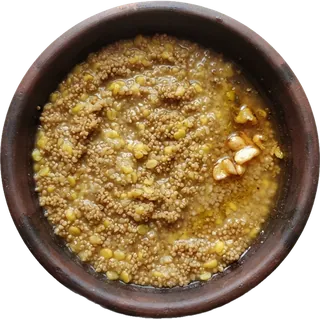
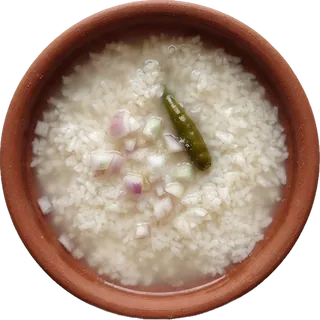
Madia ambil is a soured ragi gruel drunk cool in Bilaspur district, Chhattisgarh, carried to the fields in clay pots or bottles during sowing and harvest. The flour is cooked into a thin paste, left to sour overnight, then thinned with water and salted before drinking.
How to order
एक गिलास मड़िया अम्बिल दीजिए।
The plain water-based version is standard, but where buttermilk is kept on hand it helps to ask ‘घी या दही पड़ा है?’ before it goes into the glass.
History
In Bilaspur district and the surrounding plains of Chhattisgarh, households grind ragi (finger millet, locally madia) into flour and cook it with water into a thin paste. The paste is left covered overnight so it turns sour, then thinned further with water, salted, and carried to the fields in clay pots or steel bottles for the midday break during sowing, transplanting and harvest. Farming communities, including Adivasi households in the district, drink it standing or seated at the field edge rather than returning home for a midday meal. It is drunk cool, not heated, and is treated as a drink rather than a dish at the table.
The everyday version of madia ambil is made only from ragi flour, water and salt, and contains no animal product at any stage: nothing enters during cooking, souring or serving. In some households, a cup of buttermilk is stirred into the diluted ambil just before drinking, loosening it further and adding a lighter sourness alongside the natural fermentation. This addition is optional and varies by household rather than being a fixed step in the recipe, so a drinker who wants no dairy need only ask for the plain water-based version and skip the stirred-in buttermilk.
Where to get it
Madia ambil is usually made at home rather than bought, though weekly haats in Bilaspur district sell roasted ragi flour for it, and some field-side tea stalls keep a jar ready through the sowing and harvest seasons.