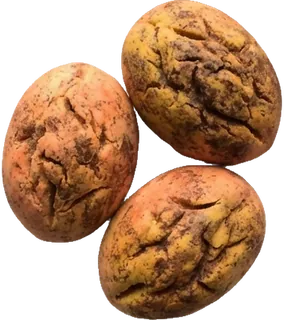
Brascidèla
A ring of rye dough scented with aniseed, pierced through the centre so it can be strung on a pole and hung to dry above the table in the valleys of Bregaglia and Poschiavo.
How to order
Mi dà una brascidèla, per favore?
The dough is always rye flour, starter, water, salt and aniseed, but ask ‘è lucidata con l'uovo?’ — is it glazed with egg — since some bakeries brush the ring before baking.
History
Brascidèla is the ring-shaped rye bread of the Bregaglia and Poschiavo valleys, two Italian-speaking valleys of canton Graubünden on the Swiss side of the Alps, Bregaglia opening south into Val Chiavenna in Italy. Villagers baked it a few times a year in the communal wood-fired oven, shaping the dough into rings flavoured with aniseed so each loaf could be threaded onto a wooden pole and hung from the kitchen ceiling beams to dry. Kept this way for months, the bread hardened until it had to be broken up or softened before eating. The custom is documented in Poschiavo households into the early twentieth century, a response to valleys cut off by snow-closed passes for much of the winter.
The dough is rye flour, sourdough starter, water, salt and aniseed: no egg, butter, milk or lard enters the mixing bowl, and the loaf is not enriched the way festive wheat breads of the same region often are. As baked, it is plant-based by default. Where dairy can still turn up is at the table, not in the recipe: in Poschiavo the dried rings were often dunked in milk or broth to soften them before eating, a serving habit rather than an ingredient. Some bakeries also brush the ring with egg before baking for shine, so the dough needs nothing checked but the glaze is worth a question.
Where to get it
Found in village bakeries in Poschiavo and across the border in the Bregaglia valley, baked around the autumn communal baking days and sold through the winter months.