Burgenländischer Bohnenstrudel
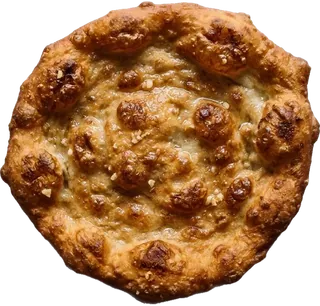
Hand-pulled strudel dough rolled around cooked white beans, roasted onion, bread cubes and marjoram, then baked or fried — the savoury strudel of the bean country.
How to order
Ist in der Bohnenstrudel Speck oder Rahm drin – und wird sie mit Ei bestrichen?
Ask for the filling without bacon and without sour cream, fried in oil, and for the strudel left unbrushed rather than glazed with egg. Note that in Purbach the word is feminine: die Strudel.
History
Burgenland is strudel country, and the fillings are as often savoury as sweet — spinach, beans, carrots, mushrooms, cabbage, potatoes. The bean version belongs to the Ponzichter belt along the old Hungarian border, where German-speaking winegrowers around Sopron grew bush beans between their vines and ate them at least twice a week, as older people in the villages still remember. Traditionally minded cooks insist on white bush beans, a variety that was once everywhere and is now rare, and which can still be bought reliably at the Sopron market.
The dough itself is the plainest thing in Austrian baking: flour, water, salt and a spoon of oil, kneaded smooth, rested, then pulled over the backs of the hands on a floured cloth until it is nearly transparent. In the Seewinkel villages there is a version called Reindl-Strudel, coiled like a snail into a covered pan and cooked on the stove plate rather than baked — which only works with home-made dough, since it is sturdier and not pulled quite as thin.
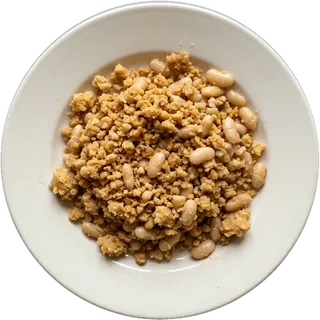
The filling that Der Standard printed from a Purbach family and the version taught in Burgenland's own intercultural recipe collection are built on beans, bread cubes, onion and marjoram, with oil or lard as the frying fat. Three things make the common version non-vegan and all three are optional: bacon fried with the onion, sour cream poured over the filling, and an egg wash on the finished roll. The bean-and-bread filling fried in oil, unbrushed, is a complete dish.
Where to get it
Gasthäuser and Heurige around the Neusiedler See — Purbach, Donnerskirchen, the Seewinkel — and at the Sterz and strudel festivals in September.