Dongshan Longyan Gan
Longan dried over a longan-wood fire in brick kilns in Dongshan, Tainan, for six days and five nights without the fire going out. The fruit comes out dark, chewy and smoky, and is sold shelled or in the shell.
How to order
老闆,土窯柴焙的龍眼乾一包多少?
The dried fruit has nothing added, so the only question is whether it was kiln-smoked or machine-dried; 「這是土窯柴焙的嗎?」 asks for the wood-fired kind, and the doubts about butter, egg or honey belong to the breads and teas made from it, not the fruit.
History
Dongshan has around 1,300 hectares of longan, the largest concentration in Tainan, which in turn holds over a third of Taiwan's planted area. Fruit is picked between July and September, with August the peak, then stripped from the branch and spread on the drying floor of a brick kiln. Longan wood burns in the flue below, the fire is kept going around the clock for six days and five nights, and the grower turns the fruit and reads the heat by experience. Roughly three kilos of fresh fruit yield one kilo dried in the shell. A 2016 cultural heritage survey recorded more than 700 kiln sites and close to 2,000 kiln mouths in the district.
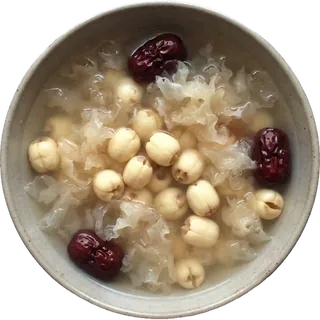
Nothing goes into the kiln but fruit and wood. There is no sugar, no syrup and no coating; the dark colour and the caramel note are what six days over a smouldering longan-wood fire does to the fruit's own sugars, and the smoke does the work that a flavouring would do elsewhere. Animal ingredients appear only further along: dried longan is bought mainly for glutinous rice puddings and for the longan bread that bakeries make with butter, eggs and milk, and longan and red date tea is sometimes sweetened with honey. Bought by the bag at the kiln or the farmers' association, it is only fruit.
Where to get it
Kilns in Nanxi village, where a lane of them has given the area its local name, and farms along County Road 175 through the hills; sold by the Dongshan District Farmers' Association and at Tainan markets, with the drying season running August into September.