Ẽmĩ
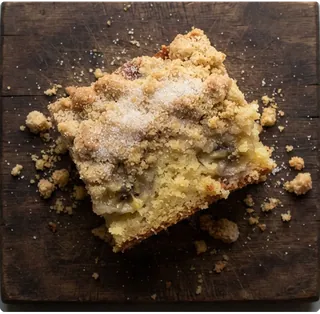
Ẽmĩ is a maize cake made by Kaingang cooks in Paraná, Santa Catarina and Rio Grande do Sul. Whole maize kernels are left to sour in water, then ground into a dense dough, shaped by hand, and baked directly in the embers of a ground fire or inside a length of bamboo. It is cut into wedges and sold warm at village markets near Kaingang lands.
How to order
Me vê um ẽmĩ aí, por favor?
The sale runs in Portuguese even at stalls set up by Kaingang vendors. Nothing about the maize itself needs settling, since ẽmĩ carries no animal product in any version; a seller asked about it will usually just say “é só milho mesmo”, meaning it is only corn. The one practical question is whether the piece came out of the fire or out of the bamboo, which changes texture, not content.
History
Ẽmĩ is the Kaingang name for a maize cake made across the Kaingang lands of southern Brazil, including Terra Indígena Xapecó in Santa Catarina, Terra Indígena Mangueirinha in Paraná, and Terra Indígena Guarita in Rio Grande do Sul. Dried or green maize kernels are soaked until they sour, then pounded or ground into a coarse dough. Cooks shape the dough into rounds or logs and set them directly in the embers of a ground fire, or pack the dough into a length of bamboo closed at both ends and bury that in the coals. The cake is eaten warm at home and at village gatherings, and turns up, in Portuguese, simply as pão de milho Kaingang at feiras held near these lands.
Everything in the pot is plant: maize, water, and the heat of wood ash, with nothing added before, during, or after baking. No animal product enters at any stage, whether the dough is baked in the embers or inside bamboo, and no butter, lard, or stock is stirred in afterward as happens with other Brazilian maize preparations. The one thing worth confirming, mostly out of habit rather than necessity, is whether a particular stall sells only ẽmĩ or also other maize sweets nearby that do carry milk or cheese, since the same table sometimes holds both. Buying ẽmĩ itself needs no further question: it is maize from start to finish.
Where to get it
Found at village markets and roadside stalls near Kaingang lands in Paraná, Santa Catarina and Rio Grande do Sul, and at feiras in towns such as Chapecó, Nonoai and Mangueirinha, especially after the maize harvest in autumn (March–May), for about R$5 to R$10 a piece.