Farina Castagnina
Chestnuts are dried for weeks over a low wood fire in a stone loft, then hulled and stone-milled into a sweet, pale flour. In the Castagniccia, in Haute-Corse, it was the flour of everyday bread and polenta, while wheat belonged to richer households on the coast.
How to order
Un sachet de farine de châtaigne, s'il vous plaît.
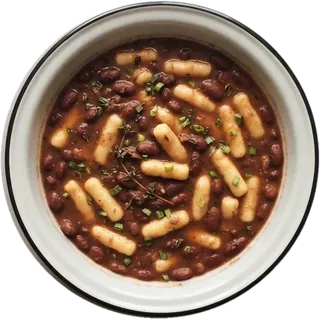
Buying the flour itself needs no question — it is chestnuts, smoke and stone, nothing else. Ordering it already cooked into pulenta or fritelle is different, so ask “Sans beurre, ni lait, ni œuf, s'il vous plaît” to be sure none went into the pot or the batter.
History
Farina castagnina — Corsican for what is called farine de châtaigne in French — is made in the Castagniccia, the chestnut-forest interior of Haute-Corse, where sixteenth-century Genoese rule ordered villages to plant what Corsicans came to call l'arbre à pain, the bread tree. Each autumn families gather the nuts, dry them for weeks over a slow wood fire in a stone loft, the seccaghju, beat off the husks at a communal dépiquaghju, then carry the kernels to the village mill to be stone-ground. Rural depopulation through the twentieth century emptied the Castagniccia of the people who kept the groves and mills running.
The flour itself carries nothing animal: chestnuts, wood smoke and a stone mill are the whole process, and the naturally sweet, starchy result needs no added sugar or fat to taste the way it does. Animal product enters only once the flour is cooked into something else — pulenta is sometimes enriched with milk or a knob of butter, and fritelle, the fried chestnut-flour fritters, often take egg and milk in the batter and are sometimes fried in lard rather than oil. Buying or asking for the flour alone settles the question outright.
Where to get it
Village markets and small stone mills across the Castagniccia, in Haute-Corse — Piedicroce, Valle-d'Alesani, Cervione — sell farina castagnina by the kilo, mostly from the autumn harvest through winter; a kilo of AOP-certified Corsican chestnut flour runs about €10-14 at a market stall or local co-operative.