Gongura Pachadi
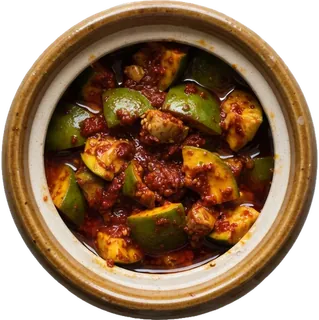
Gongura pachadi is a relish made in Guntur district of Andhra Pradesh by frying sorrel leaves in oil until they darken, then grinding them with dried red chilli, garlic and salt into a sharp, sour paste. Households in Telugu-speaking areas keep it as a standard accompaniment to rice.
How to order
దయచేసి కొంచెం గోంగూర పచ్చడి ఇవ్వండి.
Since the pachadi is made without ghee, the main thing to confirm is what else is on the plate; asking ‘ఇందులో నెయ్యి వేశారా?’ checks whether ghee has gone into the rice or any side dish served alongside it.
History
Gongura — sorrel, Hibiscus sabdariffa, also called ambada or pulicha keerai in other languages — grows widely across the Telugu-speaking districts of Andhra Pradesh and Telangana, particularly Guntur, Prakasam and Nalgonda. Households harvest the leaves through the monsoon months, strip them from the stalks, and cook them down in oil until the volume reduces sharply and the leaves turn a dark olive colour. The cooked leaves are then ground on a stone or in a mixer with dried red chilli, garlic, cumin and salt into a thick, sour paste. The pachadi is kept in sealed jars and used over several weeks, served alongside rice, ghee and papad in Guntur households and in Andhra-style messes across the state.
Gongura pachadi itself contains no animal product: the leaves are fried in oil, not ghee, and ground only with chilli, garlic, cumin and salt, with no dairy added at any stage of preparation. The naturally vegan status holds for the pachadi as prepared in Guntur households and in most eateries, since the souring agent is the sorrel itself rather than curd or tamarind. The point for a diner to check is not the pachadi but what surrounds it on the plate: rice is often served with a spoon of ghee stirred through it, and the accompanying papad or vadiyalu may be fried in the same oil used for other dishes in a kitchen that also cooks with ghee or milk.
Where to get it
Sold in small jars at Guntur markets and roadside stalls, and made fresh in Andhra-style messes and household kitchens, particularly during the gongura harvest months of the monsoon season.