Pesarattu
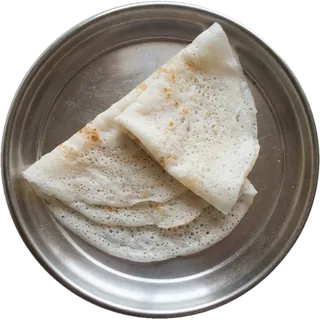
Pesarattu is a thick, unfermented pancake ground from whole green gram with ginger and green chilli, spread directly onto a hot griddle and often studded with chopped onion. It is a breakfast staple of Rajahmundry and the Godavari districts of Andhra Pradesh, usually served with upma or chutney.
How to order
దయచేసి ఒక పెసరట్టు ఇవ్వండి.
Confirm whether ghee has gone on the griddle by asking ‘పెనం మీద నెయ్యి వేస్తారా?’ (do you put ghee on the griddle), and check if the accompanying upma is tempered with ghee or oil.
History
Pesarattu is a dosa made from whole green gram ground raw with ginger and green chilli, documented as a dish of the Godavari delta region of Andhra Pradesh, particularly Rajahmundry and the surrounding East and West Godavari districts. Households soak whole green gram overnight, grind it to a thick batter without fermentation, and spread it thick on a hot griddle, often with chopped onion pressed into the surface. It is eaten as breakfast or an evening meal, commonly paired with upma, ginger chutney, or coconut chutney, and sold at tiffin stalls and small eateries across Andhra Pradesh and Telangana.
The batter itself contains no animal product: whole green gram, water, ginger and chilli, ground and spread without fermentation or dairy, unlike idli or dosa batters that sometimes include curd to aid rising. Pesarattu needs no souring agent since it is cooked soon after grinding. The point where dairy can enter is the griddle itself: some stalls and households brush or pour ghee on the hot pan before spreading the batter, or finish the cooked pesarattu with a dab of ghee, and the upma often served alongside may be tempered with ghee rather than oil. Asking about the griddle and the accompanying upma covers both points where dairy might appear.
Where to get it
Pesarattu is sold at tiffin stalls, breakfast messes and small restaurants across Rajahmundry and the Godavari districts, and more widely in Andhra Pradesh and Telangana, typically in the morning hours.