Guanxi Xiancao
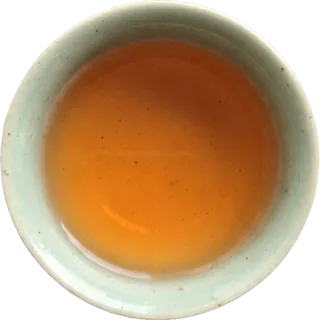
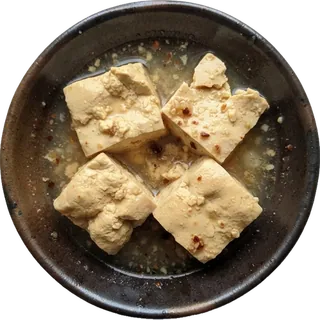
Xiancao is mesona, a mint-family herb grown on the slopes of Guanxi in Hsinchu County, dried in the autumn wind and boiled for hours into a dark liquid, drunk as tea or set with sweet-potato starch into black jelly.
How to order
老闆,一碗燒仙草,不要加煉乳。
Ask for it without the milk, 「不要加煉乳、不要加鮮奶」, and for the chilled soft-set kind check the setting agent with 「這個是用地瓜粉凝的,還是吉利丁?」, meaning 'is this set with sweet-potato starch or gelatin?'
History
Guanxi is hill country, misty and well drained, and mesona is planted in March and pulled up whole, roots and all, after the white dew term in autumn and before it flowers. The crop is dried in the north-east wind, tied into bundles and stored for a year or more before processing, which concentrates the aroma. Farm households boiled the dried herb with water into a tea carried out to people working in the fields, and thickened the same liquid with sweet-potato or other starch to set as a jelly. The township farmers' association chose mesona as Guanxi's crop in 1989 and built a processing plant in 1992.
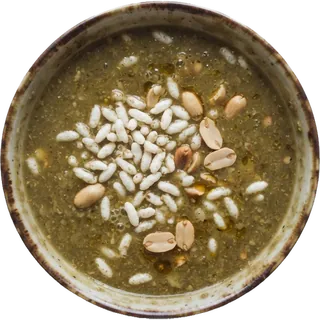
Jelly and tea alike are herb, water, sugar and a plant starch; the setting is done by the mesona's own gelling polysaccharides helped along by sweet-potato starch, not by gelatin, and hot grass jelly is normally topped with taro balls, tapioca pearls, peanuts and red beans, all of them plant. Two things to watch in a dessert shop: condensed milk or fresh milk poured over the cold jelly, which is a standard option, and some soft-set versions made with gelatin rather than starch. Chicken cooked with mesona is a separate dish on the same local menus.
Where to get it
The Guanxi farmers' association mesona processing plant and its new farmers' market, and the mesona museum farm on Zhongfeng Road run by the Xiancao Xiang family; the harvest is pulled after the white dew term in September, and the township has run a mesona festival most years since 2001.