Kalguksu
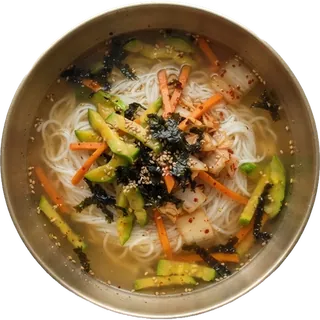
Wheat dough is rolled thin, cut into wide strips with a knife, and boiled directly in the broth so the starch released by the noodles thickens the soup as it cooks. It is a lunchtime staple across Korea, eaten hot in Seoul noodle shops and along Daejeon's kalguksu alley near Yudong.
How to order
혹시 멸치 육수 안 들어간 칼국수 있어요?
The broth is usually made in one batch each morning from anchovy and kelp, chicken bones or clams, so asking a kitchen to leave it out after the fact rarely works. The only real option is a shop that keeps a separate vegetable-based broth, which few do; ask directly with “혹시 멸치 육수 안 들어간 칼국수 있어요?” and expect that most counters will simply say no.
History
Kalguksu (칼국수) takes its name plainly from kal, knife, and guksu, noodle, for the way the dough is rolled flat and cut by hand rather than extruded. Before mechanized milling, wheat was scarcer than rice in most of Korea and became cheap and plentiful only with the flour aid that followed the Korean War, which is when the dish spread from occasional farmhouse food into a common lunch. It was traditionally eaten in summer, before the rice harvest, and is still served hot year-round in Seoul noodle shops and along Daejeon's Yudong kalguksu alley, a street of shops built on the dish.
The dough is flour, water and salt, and the vegetables in it — zucchini, potato, scallion — are plant to start. The broth is where the question sits: nearly every shop builds it on dried anchovy and kelp (myeolchi-yuksu), on chicken stock, or on clam stock, started before any noodles go in, and a shop usually commits to just one. Egg, shredded and fried into strips, often tops the bowl. The kimchi alongside may carry jeotgal or fish sauce in its paste. All of this has to be settled before the pot is made, since the broth cannot be changed once the noodles cook in it.
Where to get it
Noodle shops throughout Seoul, especially around Jongno and the traditional markets, and the row of kalguksu restaurants along Yudong-ro in Daejeon, open for lunch and dinner year-round; a bowl runs 7,000-9,000 won.