Kvaneyi
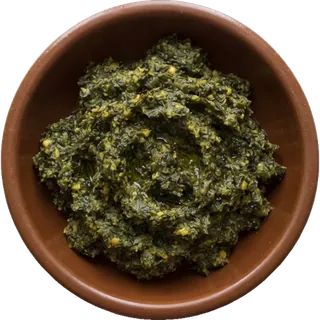
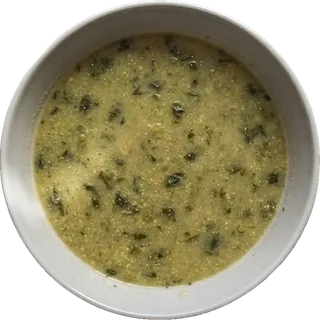
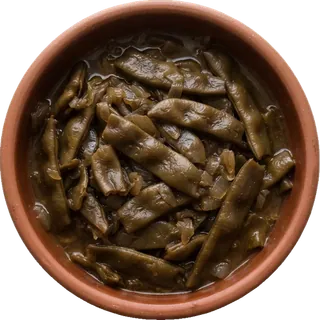
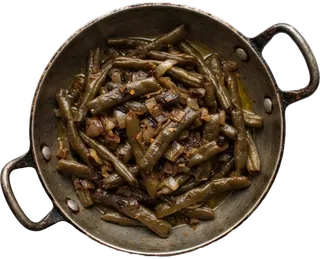
Dried beans boiled until they fall apart, then beaten together with pounded walnut over low heat until the pot thickens into a dense, spoonable purée.
How to order
Bir kvaneyi, lütfen.
Ask before the pot comes off the stove, since the butter goes in there and not at the table. Say “tereyağsız olsun” (let it be without butter).
History
Kvaneyi comes from the Laz-speaking villages around Hopa, on the eastern Black Sea coast in Artvin province. It is a home dish, made by Laz households rather than sold as a specialty, from dried beans and walnuts grown in the same valleys. The beans are boiled until they break down, then walnuts are pounded to a paste and beaten into the pot with a wooden spoon until the whole mass turns thick and pale brown. The name comes from the Laz verb meaning to beat or pound, describing the motion rather than a single ingredient. In Turkish the same dish is sometimes called cevizli fasulye, walnut beans, though the Laz name is the one used in Hopa itself.
Everything in the pot starts out plant: the beans, the walnuts, the onion if one is added, and the water they cook in. The animal product is butter, stirred in or poured over once the beans and walnuts have already been beaten together, as the dish is finished rather than while it is simmering. That happens in the kitchen, before the bowl reaches the table, so asking afterward changes nothing. The only point where the question can be settled is at the point of order or at the stove: whether the cook reaches for butter or for oil when the pot comes off the heat.
Where to get it
Kvaneyi turns up in home kitchens and small lokantas in Hopa and the surrounding Laz villages of Artvin province, most often in the colder months when dried beans are the daily staple.