Makhmakh
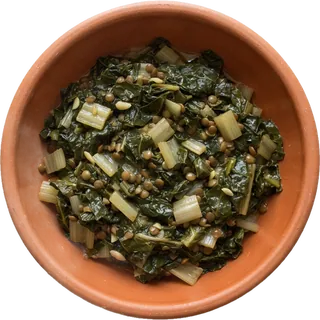
Purslane leaves and stems are simmered down until the liquid turns thick and slightly ropy, in the method used for molokhia, then spooned over rice in Siwa Oasis gardens and kitchens.
How to order
ممكن مخمخ من غير لحمة، بزيت لو سمحت؟
Ask for it ‘من غير لحمة، بزيت لو سمحت’ since the usual version includes mutton and may be finished with samna rather than oil.
History
Purslane grows along Siwa Oasis irrigation channels and in garden plots tended by Siwi Amazigh families, who speak Siwi rather than Arabic at home. The leaves and tender stems are picked, chopped, and cooked down slowly until the dish takes on the thick, slightly mucilaginous texture associated with molokhia, which is prepared the same way across Egypt with a different green. Makhmakh is documented from twentieth-century accounts of Siwan household cooking as a standard accompaniment to rice, and it remains a dish made at home rather than served in restaurants outside the oasis town itself.
The standard way of making makhmakh in Siwa adds mutton to the pot, cooked alongside the purslane so the meat flavors the sauce the way chicken or rabbit does in molokhia elsewhere in Egypt; the dish as usually served is not plant-based. A version without the meat exists and is straightforward to make, since the greens themselves, the garlic, and the souring agent carry the dish, and oil rather than mutton fat is used for any frying step. This substitution is something a household or a counter in Siwa town can do on request, but it is a departure from how makhmakh is normally cooked rather than the standard recipe.
Where to get it
Makhmakh is a household dish in Siwa Oasis, cooked from purslane grown in garden plots along the irrigation channels; a few small eateries in Siwa town that serve local dishes to visitors also prepare it, mostly in the warmer months when purslane is in season.