Mancar Diblesi
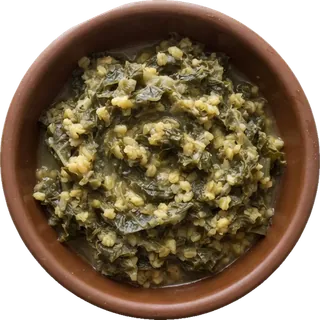
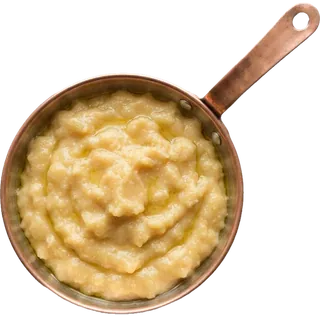
Mancar diblesi is a thick, dark stew of white beans and mancar — a broad-leafed green close to chard — cooked together in oil until both fall apart into a soft, spoonable mash. It comes from the inland villages of Düzce in the western Black Sea region.
How to order
Mancar diblesini tereyağsız yapar mısınız, lütfen?
The key word is “tereyağsız” — without butter. Since the butter goes into the pan at the very start, it has to be left out of the cooking itself, not just skipped as a topping.
History
Mancar diblesi comes from the western Black Sea region, chiefly Düzce province, where mancar — a broad, dark-leafed green close to chard — grows along stream banks and garden edges from autumn into early spring. Village and small-town cooks chop the leaves, soften onion in a pan, add the greens with a handful of white beans, dust in a little flour, and let the pot cook down slowly until the beans fall apart and the greens collapse into a dense, almost pureed mash. The cooking method itself is called dible, the same word used for spinach diblesi and chard diblesi elsewhere in the region, and in some villages the green is called simply pancar.
Everything in the pot other than the fat is plant: the beans, the mancar greens, the onion, the flour used to thicken it. The animal product is butter, and it enters right at the start, melted in the pan before the onion goes in, not stirred in afterward and not added at the table. Because it is cooking fat rather than a garnish, asking at the table changes nothing once the dish is finished; the only way to be sure is to ask the kitchen before it is made, or to find a version started in sunflower or olive oil instead.
Where to get it
Home-style lokantas and village kitchens in Düzce and the surrounding western Black Sea villages serve mancar diblesi mainly in late autumn and winter, when the greens are in season.