Mian Cha
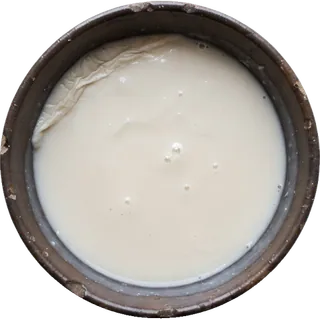
Wheat flour dry-fried to a deep brown with sesame, sugar and shallot, then slaked with boiling water into a thick sweet paste eaten with a spoon. A cart food of old Taipei, sold around Dadaocheng and Ningxia night market.
How to order
老闆,來一碗麵茶。
The one thing to settle is the frying fat: ask 「請問是豬油炒的,還是素的?」, meaning 'was it fried with lard, or is it the plant one?', since the fried shallot stirred into it is usually cooked in lard too.
History
Flour is stirred in a dry pan over a low flame for twenty or thirty minutes until it turns from white to a deep coffee brown, with toasted sesame, fried shallot, salt and brown sugar worked in; the resulting powder keeps, and a spoonful slaked with water at a hard boil swells into a glossy paste. Carts selling it worked the streets of Taiwan with a whistling kettle, and in the 1960s it served as breakfast, as a winter snack and, in poorer households, as a weaning food. In Taipei one long-running cart trades by day at the Yongle market end of Dihua Street and at night in Ningxia night market, selling it beside sesame paste and apricot-kernel tea.
The animal ingredient enters at one point only: the fat the flour is fried in. The older recipe is explicit about lard, and the shallot crisps stirred through are themselves fried in lard, which is why older cooking writing divides the dish into a meat version and a plant version. The plant version is not a modern compromise but the standard alternative, made with sesame oil or another vegetable oil, with sesame or ground peanut carrying the roasted aroma that the lard otherwise supplies. Stalls that make both will say which pot is which if asked before it is mixed.
Where to get it
Sold from a street cart in Datong District that stands by day near Yongle market on Dihua Street and moves to Ningxia night market in the evening, and sold as a packaged powder in grocery shops along Dihua Street.