Milao
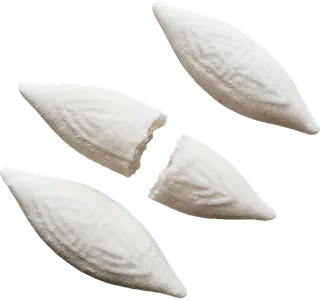
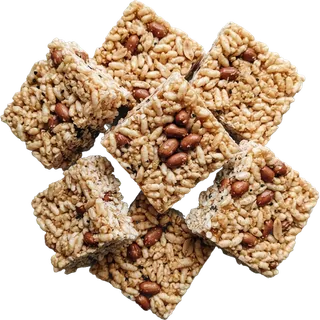
A finger-length stick of steamed glutinous rice and taro, dried, fried until it puffs hollow, glazed with maltose and rolled in puffed rice. It is a traditional confection of Lukang in Changhua County.
How to order
老闆,米粩一包,謝謝。
The doubt is the frying fat, since the sweet one is also called 豬油粩; ask 「這是用植物油炸的嗎?」 and take the plain sweet kind rather than the salty shallot version.
History
Milao begins as a dough of glutinous rice and taro, steamed, cut into short bars and dried into a hard billet called kue-kuann. The billet is fried through a run of oil temperatures until it expands into a hollow, fibrous core, then brushed with boiled maltose and rolled in puffed rice; rolled in sesame instead, the same core becomes malao. It is a fixture of Lukang's old pastry trade, sold by shops around the temple quarter, and has long served as an altar offering and as a betrothal and wedding-return gift. Lukang also makes a salty version, scattered with golden fried shallot and eaten with soy milk.
The core is rice, taro and maltose, and the puffed-rice coating is rice alone, so the question is only the frying fat. The sweet version carries the older name chu-iu-lau, pork-fat lao, because early makers fried the billets in lard, and some Lukang shops still sell it under that name. Commercially packed lao now generally lists palm or other vegetable oil on the label, and several makers mark their boxes as fully plant-based. The salty Lukang version adds fried shallot, which is often fried in lard. Ask which oil was used, and choose the plain sweet one.
Where to get it
Sold by the old pastry shops of Lukang around Tianhou Temple and Zhongshan Road, including Yu Jen Jai, founded 1877, and Cheng Yu Jen next door, founded 1887; stocked most heavily before Lunar New Year and in wedding season.