Musaengchae
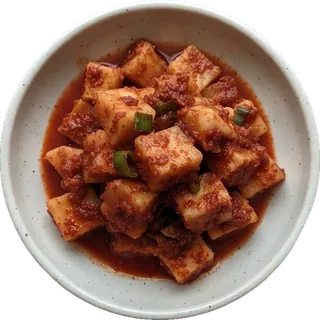
Winter radish is cut into matchsticks and tossed raw with chilli powder, vinegar and sugar until the flesh turns pink and begins to weep its own liquid. It is made minutes before serving, a standard banchan on Seoul home tables through the coldest months, when radish is sweetest.
How to order
무생채에 새우젓 빼고 주세요.
Saeujeot is mixed in at the salting stage, before the chilli powder goes on, so ask before it's dressed: “무생채에 새우젓 빼고 주세요.” Many home kitchens and small banchan counters use plain salt by default, so the dish is often already plant-based, but some restaurants and kimjang-season batches season with saeujeot as a matter of course.
History
Musaengchae (무생채) is one of the plainest dishes in Korean cooking: winter radish, salted briefly to soften, then dressed raw with gochugaru, vinegar and sugar, eaten the same day it is cut rather than fermented like kkakdugi. In Seoul kitchens it appears through the winter months, when radish dug before the first hard frost is at its sweetest, served alongside grilled fish or bibimbap, and set out at Seollal and on jesa tables where a fresh, unfermented vegetable dish is required alongside the kimchi.
The dish carries none of the usual risk points of Korean cooking: it is not fermented, so there is no jeotgal in a kimchi paste, it is not a soup or noodle dish, so there is no myeolchi-yuksu beneath it, and it carries no egg garnish. The one place animal product does enter is the salting stage: some home cooks season the raw radish with saeujeot, salted shrimp, in place of plain salt, mixed in before the chilli powder goes on. Once mixed in it cannot be picked out, so whether the radish was salted with saeujeot or salt is the detail to settle before it is dressed.
Where to get it
Banchan counters inside Seoul's traditional markets — Gwangjang Market, Tongin Market — sell it loose by the container, alongside home kitchens across the city through autumn and winter; a small tub runs about 2,000-4,000 won.