Naengmyeon
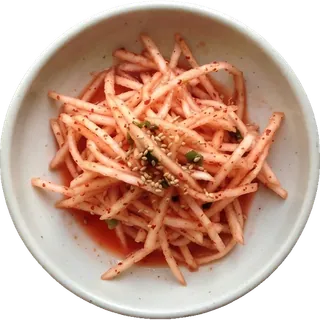
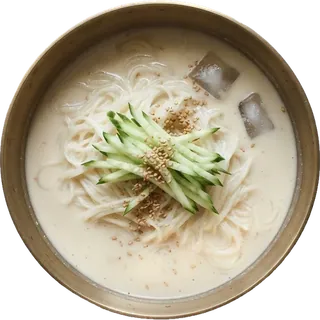
Buckwheat noodles mixed with starch are extruded into boiling water, then served in iced beef-and-dongchimi broth or tossed with chilli paste. Refugees from Pyongyang and Hamhung carried the dish south after the Korean War, and it is eaten across Seoul and Busan through summer, at noodle houses open into the evening.
How to order
비빔냉면에 고기랑 계란 빼고 주세요.
Mul-naengmyeon's broth is beef stock boiled down in advance and already mixed with dongchimi brine before it reaches the bowl, so asking for it without meat does not work — the broth itself is beef. The plant-based route is to order bibim-naengmyeon, the sauce-based version with no broth, and ask for the egg and beef to be left off the top: “비빔냉면에 고기랑 계란 빼고 주세요.”
History
Naengmyeon (냉면) began in Pyongyang and Hamhung, in what is now North Korea, where buckwheat grew on cold mountain soil ill-suited to rice. Pyongyang cooks mixed it with starch and dressed it in a mild beef broth cut with dongchimi brine, eaten in heated rooms through harsh winters as a counterpoint to the cold outside; Hamhung cooks worked sweet-potato starch into a chewier noodle and tossed it with chilli paste instead of broth. After the Korean War, refugees from both cities settled in Seoul and in Busan, the wartime capital, reopening their noodle shops there and turning a northern winter dish into a summer fixture of both cities.
The noodles are plant: buckwheat flour bound with starch, no egg worked into the dough. The broth is where the dish turns animal — beef bones and brisket are simmered for hours, then the stock is strained, mixed with dongchimi brine and chilled, so meat is cooked into the liquid itself rather than added at the table. A few slices of that same brisket and half a boiled egg are laid on top before serving. Bibim-naengmyeon, the chilli-paste version, skips the broth and the beef-stock problem entirely, leaving only the egg garnish to settle.
Where to get it
Naengmyeon specialists in Seoul's Mapo-gu and Euljiro, many run by descendants of Pyongyang and Hamhung refugees, and similar noodle houses around Busan's Gukje Market, serving lunch through the humid months from June to August; a bowl runs 10,000-14,000 won.