Namasia Shuimitao
Small thin-skinned peaches grown in the mountain district of Namasia in Kaohsiung, on slopes far lower than peaches usually tolerate. They ripen from mid-April, earlier than anywhere else in Taiwan, and are sold by the box.
How to order
老闆,水蜜桃一盒多少錢?
The fruit itself raises no question. If you order the peach and aiyu jelly sold at the village markets, ask 淋的是糖水還是蜂蜜? so you know whether the syrup is cane sugar or honey.
History
Namasia lies along the upper Nanzixian river and is made up of the villages of Nangisalu, Maya and Takanua, which took back their own names in 2008. Of its roughly three thousand residents about seven in ten are Bunun and one in ten Kanakanavu, with Hla'alua, Paiwan, Rukai, Atayal and Han neighbours; the district name comes from a Kanakanavu account of a young man who warned his community of danger in the river. Growers have worked peaches here for more than twenty years, across some forty hectares of these tropical mountain slopes. The trees are bagged fruit by fruit, picked from mid-April to early June, and boxed in eights, tens and twelves; the district office runs an annual judging.
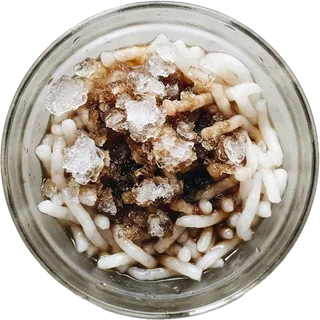
A peach is plant food and needs no adjusting, which is the point of an orchard crop sold at the roadside in a paper box. The fruit is washed and eaten, or pressed into juice. The one preparation to ask about is the bowl of aiyu jelly that village stalls serve with peach flesh spooned over it: aiyu is set by rubbing the seeds of the aiyu fig in water, so the jelly itself contains no gelatin and no dairy, but the syrup poured over it varies from cane sugar to maple syrup, and honey is used in some kitchens. Ask which before it is poured.
Where to get it
Roadside stands and the village markets at Maya and Takanua from late April to mid-June, where growers box fruit as they pick it; boxes can also be ordered directly from Namasia growers, and the fruit travels down to markets in Kaohsiung city during the season.